

WAREHOUSE & SHOWROOM

15700 Middlebelt Rd
(Between 5 & 6 Mile)
Livonia, MI 48154

(734) 751-4413

HOURS

Now open earlier!
Sunday: 11:00 am – 5:00 pm
Monday: 11:00 am – 6:00 pm
Tuesday: CLOSED
Wednesday: CLOSED
Thursday: 11:00 am – 6:00 pm
Friday: 11:00 am – 6:00 pm
Saturday: 10:00 am – 6:00 pm

2026 Top Car Rooftop Tent Types for Global Buyers

A Car Rooftop Tent turns a parked vehicle into a sleeping platform, but choosing one is not just a matter of comfort. Buyers must weigh setup time, packed height, vehicle roof limits, weather protection, and how many people will sleep inside. A hard-shell model can open quickly at a roadside stop. A soft-shell tent often offers more space, but its folded cover may catch the wind and need more careful handling. Fit matters.

Demand for outdoor experiences gives this product category a broader context. The Outdoor Industry Association’s 2024 Outdoor Participation Trends Report counted 175.8 million U.S. participants in outdoor recreation. That figure describes participation, not rooftop-tent sales, and should not be mistaken for a market forecast. Still, it helps explain why buyers compare camping gear that supports flexible trips. So does weight.

Overland Journal founder Scott Brady defines overlanding as “self-reliant adventure travel to remote destinations where the journey is the goal.” That idea helps frame the choice: the right tent depends on the vehicle, route, climate, and traveler—not just the product photos. This guide compares hard-shell, soft-shell, and hybrid designs for global buyers, with attention to setup, storage, and sleeping capacity. Trade-offs remain. A spacious tent may add bulk; a compact one may feel cramped on a rainy night. Check the details before choosing.
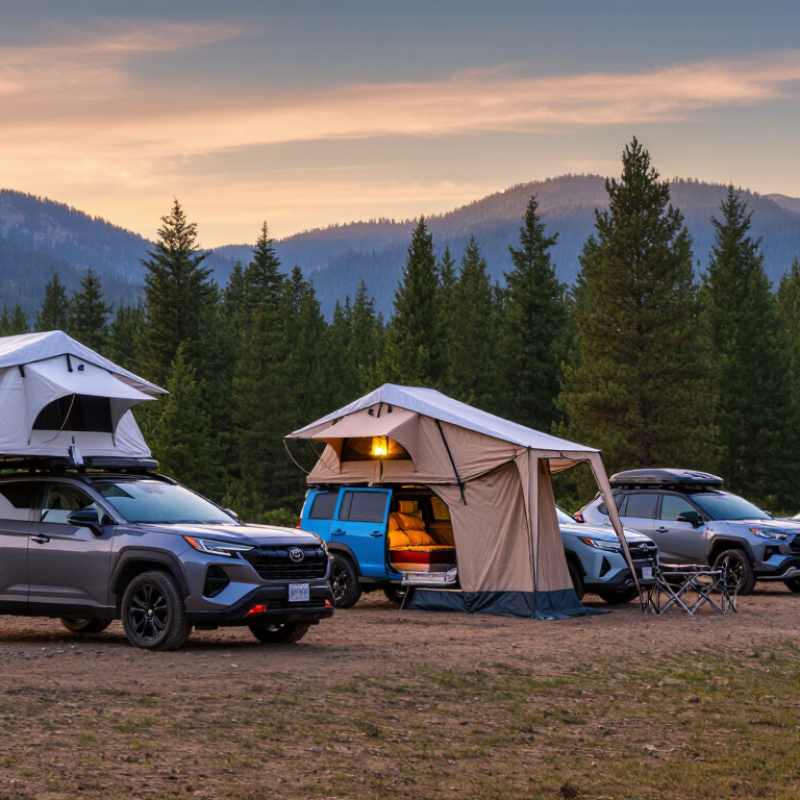
2026 Top Car Rooftop Tent Types for Global Buyers

What a Car Rooftop Tent Is and How It Mounts

A car rooftop tent is a compact sleeping shelter carried above a vehicle, usually on roof crossbars or a dedicated load-bearing rack. It folds or closes for travel, then opens when the vehicle is parked. Some models use a soft fabric cover; others have a rigid outer shell. It needs support. The tent does not normally attach directly to the roof panel.

Mounting starts with checking compatibility. The vehicle roof, rack, and tent must all support the planned load. Pay attention to the rack’s dynamic rating for travel, and follow the vehicle and tent makers’ limits. When parked, people inside add weight, so confirm the permitted stationary load too. Small details matter. Bar spacing, mounting hardware, and roof shape can affect fit.

The tent’s brackets clamp around the crossbars, securing its base to the rack. Tighten them evenly, then recheck every fastener before driving. A second person can make lifting and positioning safer. Keep the tent centered, and make sure it does not block doors or interfere with antennas. A setup may look neat but still feel awkward to access; test the ladder and opening clearance at home. After the first trip, inspect the hardware again, since vibration can loosen connections.

The Main Rooftop Tent Types Available in 2026

The main rooftop tent types in 2026 are soft-shell fold-outs, hard-shell clamshells, and pop-up hard-shells. Soft-shell models unfold into a broad sleeping area, often with a fabric-covered annex. They can suit families, but take longer to open and may catch more wind. Clamshell tents usually lift from one side, creating a low-profile wedge with a firm top. Pop-up designs raise the roof more evenly, giving occupants extra headroom. Measure twice. Vehicle roof limits, rack capacity, and the tent’s loaded weight matter as much as sleeping space.

These categories are useful, but not perfectly consistent across sellers. Check the packed dimensions, mattress size, opening mechanism, and weather protection before comparing prices. A tent that opens quickly can still be awkward on a narrow parking space. The Outdoor Industry Association’s 2024 Outdoor Participation Trends Report recorded 175.8 million U.S. outdoor recreation participants in 2023. That figure signals broad interest in outdoor trips, not rooftop-tent sales specifically. Buyers should treat it as context, not proof of demand for any one tent type. Test the ladder angle and closure straps, too; small details can become irritating after a wet night.

How Hard-Shell and Soft-Shell Designs Differ

Hard-shell and soft-shell rooftop tents differ most in setup, packed size, and how they handle changing weather. A hard-shell model has a rigid roof that lifts or hinges open. Many can be ready for sleeping within minutes, with bedding sometimes left inside when closed. That is practical after a long drive. The trade-off is a heavier, bulkier unit that may need stronger roof bars and careful attention to the vehicle’s load limits. Its compact footprint can also leave less room inside than buyers expect.

Soft-shell tents fold out from a fabric cover, often creating a wider sleeping area for the same vehicle. They are commonly lighter and can cost less, but opening and packing them takes more work. Wet canvas needs to dry before storage, or dampness may become a problem. Not always convenient. Before choosing, compare the tent’s weight with your vehicle and roof-rack specifications, then check closed height against garages and low branches. Climate matters too: frequent rain or strong sun makes fabric quality and ventilation important. I would not choose by sleeping capacity alone; access to the ladder and space for luggage can change the experience. A quick setup sounds decisive, but real trips are rarely that tidy.

2026 Top Car Rooftop Tent Types for Global Buyers - How Hard-Shell and Soft-Shell Designs Differ

Buying factor Hard-shell rooftop tent Soft-shell rooftop tent
Typical construction A rigid top and base, commonly made with molded composites, fiberglass, aluminum, or similar materials; fabric walls form the sleeping area. A fabric tent body supported by a folding frame, usually with a fabric-covered base and a protective travel cover.
Setup and pack-down Often quick to open and close because the rigid shell lifts or hinges into position. The exact process depends on the opening mechanism. Usually requires removing or managing the cover and unfolding the tent. Some models need the ladder or rainfly positioned during setup.
Travel profile Often has a lower, more enclosed packed profile, though shell shape and vehicle clearance vary by model. Typically packs into a fabric-covered bundle that can be taller or bulkier; the packed size depends on the tent and cover design.
Interior space Space is shaped by the shell and opening design. Some models offer room for bedding when closed, but this is not universal. Many folding designs create a broad sleeping area relative to their packed size. Available room varies with the footprint and layout.
Weather protection The rigid shell protects the closed tent during travel. At camp, fabric walls, seams, vents, and rainfly design determine weather performance. Performance depends on fabric, waterproofing, seam construction, rainfly coverage, and correct setup. The travel cover helps protect the folded tent while driving.
Weight and roof compatibility Can be heavy, particularly with a rigid shell and mounting hardware. Check the tent’s installed weight against the vehicle and roof-rack limits. Weight varies substantially by size, frame, and materials. Confirm the complete installed load, including rack hardware, meets the vehicle maker’s limits.
Best suited to Travelers who prioritize fast deployment, a rigid travel enclosure, and a streamlined packed shape. Travelers who prioritize a folding layout, a potentially larger sleeping footprint for the packed size, or a wider range of configurations.
Points to check before purchase Closed height, opening direction, deployed clearance, mounting system, ventilation, and whether bedding can remain inside when closed. Packed dimensions, cover fit, setup steps, ladder placement, rainfly coverage, and how the folded tent is secured for travel.

Comparison describes common design tendencies, not a guarantee for every model. Always check the tent specifications, roof-rack limits, and vehicle manufacturer’s guidance before installation.

Key Features That Shape Comfort, Setup, and Durability

Comfort begins with the mattress, but ventilation often decides whether a night feels restful. Look for adjustable vents, a rain fly with drainage channels, and enough headroom to change clothes. Mesh panels help, yet wind-driven rain can still expose weak seams. Test the ladder on uneven ground before buying. Small detail. Big difference.

Setup speed matters after a long drive. Compare hinge action, pole routing, and whether the cover closes without forcing the fabric. Practice once at home; the first roadside attempt is rarely graceful. The Outdoor Industry Association’s 2024 Outdoor Participation Trends Report counted 175.8 million U.S. outdoor participants in 2023. That broad figure reflects varied outdoor habits, not rooftop-tent sales.

Durability depends on more than shell thickness. ISO 11154:2023 outlines requirements and test methods for vehicle roof load carriers; it is a useful reference, not a tent certification. Check the vehicle maker’s dynamic roof-load limit, and remember that driving loads differ from parked loads. Inspect seam sealing, zipper paths, and pole joints. Waterproof ratings help, but real weather is less tidy than a test sheet. I would still want to see how the fabric behaves after repeated folding.

How Global Buyers Can Match Tent Types to Vehicles and Travel Needs

Matching a rooftop tent starts with the vehicle, not the tent catalogue. Check the owner’s manual for the permitted moving roof load, then compare it with the rack and tent weights. Include crossbars, mounting hardware, and other roof cargo. Never substitute a parked load rating for the driving limit. Small SUVs often need a lighter setup. Wider vehicles may offer more room, but roof shape and bar spacing still matter.

Hard-shell tents typically open quickly and pack into a compact profile, useful for frequent overnight stops. Soft-shell designs often provide a broader sleeping area for families, though setup and storage can take longer. No type fits all. Check the closed height in a garage and ladder reach on uneven ground. For cold, wet routes, inspect ventilation, rainfly coverage, and fabric care instructions. A dry-looking shell can still trap condensation.

Match capacity to actual occupants and bedding, not just the number listed on a product page. Measure packed gear, then leave room for safe access to doors and emergency equipment. On a test fit, listen for movement and check clamp contact. Recheck fasteners after the first short drive, following the installation guidance. Watch for movement. A tent may fit physically yet make the vehicle awkward to load or park. That trade-off is easy to underestimate.