

2026 Top Outdoor Sectional Types for Global Buyers
Global buyers are entering a more demanding outdoor furniture market in 2026. The outdoor sectional is no longer only a patio centerpiece. It now supports flexible seating, compact living, hospitality projects, and year-round entertaining. Grand View Research reported that the global outdoor furniture market reached approximately USD 20 billion in the early 2020s, with steady growth expected through 2030. Other studies publish higher estimates because they define outdoor furniture differently. The numbers vary. That matters.
This guide examines the leading outdoor sectional types for international purchasing teams. Modular designs remain practical because buyers can rearrange corner units, armless seats, and ottomans around changing spaces. Aluminum frames suit humid coastal regions when manufacturers use suitable coatings and stainless-steel fasteners. Powder-coated steel can offer strength, but surface damage may require prompt repair. All-weather wicker creates a familiar resort look, although fiber quality differs widely between suppliers. Teak provides warmth and durability, yet responsible sourcing and maintenance requirements deserve careful checking.
Climate changes everything. Buyers in rainy regions should examine drainage, quick-dry foam, and removable covers. In hot climates, breathable fabrics and lighter colors can improve comfort. The U.S. Environmental Protection Agency and European sustainability guidance also encourage longer product life, repairability, and responsible material choices. These principles should influence specifications, not merely marketing language. Recent Houzz outdoor living research shows that homeowners continue investing in functional exterior spaces, but residential preferences cannot represent every global market. That limitation is worth remembering.
A reliable comparison should consider seat depth, carton size, assembly time, warranty coverage, testing records, and replacement-part availability. Beautiful photographs help, but they cannot confirm performance. We will look closely.
What Defines an Outdoor Sectional in 2026
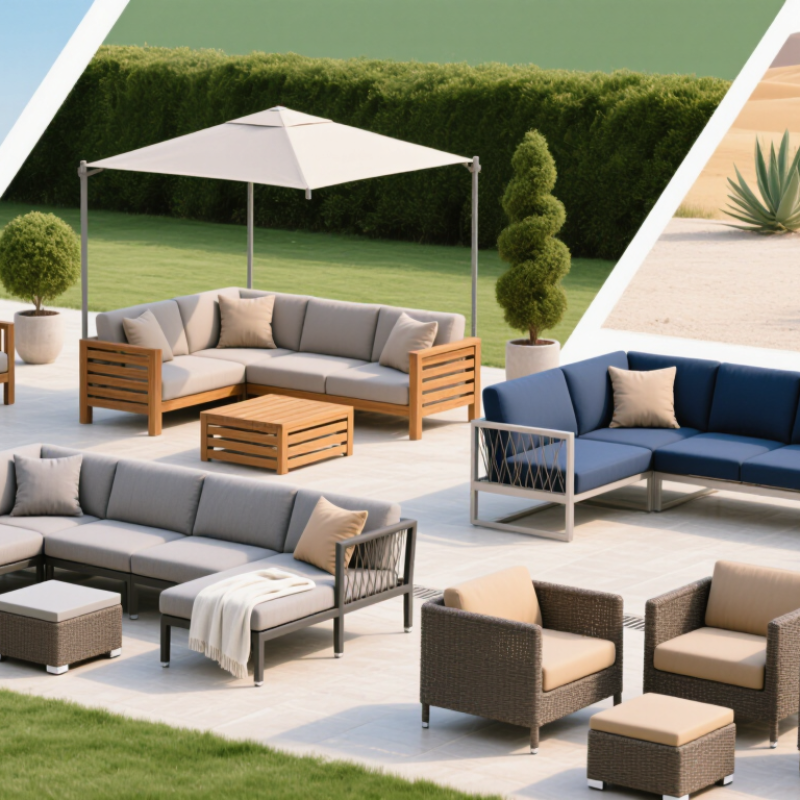
In 2026, an outdoor sectional is more than a large sofa placed beside a pool. It is a flexible seating system designed for changing weather, spaces, and lifestyles. Buyers increasingly look for modular units that can form an L-shape, U-shape, or separate seats. This flexibility matters on compact balconies and wide hotel terraces. Deep cushions, supportive back angles, and breathable covers also define current comfort standards.
Reliable outdoor sectionals use materials selected for repeated exposure to sunlight, moisture, and temperature changes. Powder-coated metal frames can resist corrosion when properly maintained. Quick-drying foam helps reduce trapped moisture after rain. Solution-dyed fabrics usually provide stronger color retention than ordinary indoor textiles. However, no material is maintenance-free. I have found that even durable furniture performs poorly when water collects beneath cushions. Design quality must include drainage, ventilation, and easy access for cleaning.
Tips: Measure the area before choosing a configuration. Leave walking space around the sectional. Check cushion density, frame joints, fabric performance, and replacement-part availability. Ask for care instructions suited to your local climate. Buyers in humid regions may need removable covers and faster-drying materials. In dry, sunny regions, UV resistance deserves greater attention. A practical sectional should look refined, but it should also survive ordinary neglect. That is where many attractive designs still need improvement.
Key Outdoor Sectional Types for Global Buyers
2026 Top Outdoor Sectional Types for Global Buyers
Global buyers are not choosing one universal outdoor sectional. Climate, balcony size, shipping limits, and local habits shape the decision. Grand View Research valued the global outdoor furniture market at about USD 22.4 billion in 2023. Its forecast points to continued growth through 2030, supported by residential outdoor living.
Modular L-shaped sectionals remain practical for compact terraces. Their corner seat uses space efficiently. U-shaped sectionals suit large hospitality areas and family gardens, but they need wider access routes. Linear armless units pack more efficiently and allow flexible layouts. Conversation sets work well beside fire tables, while dining-height sectionals support meals and longer stays. Each type solves a different problem.
Materials matter as much as shape. Powder-coated aluminum reduces weight during container handling. Teak offers a warm surface, but it needs responsible sourcing and regular care. Solution-dyed fabric can resist fading, although “weather-resistant” never means maintenance-free. The EU’s outdoor furniture market is also influenced by stricter sustainability expectations, according to recent European market studies. Buyers should request test results for UV exposure, corrosion, water drainage, and load capacity. Small details matter.
A deep seat can feel luxurious. It can also become uncomfortable for shorter users. This is an easy mistake. Product teams should test seat height, cushion recovery, and packaging damage before scaling orders. Regional feedback remains essential; one specification rarely fits every market.
Materials, Weather Resistance, and Structural Features
2026 Top Outdoor Sectional Types for Global Buyers
Materials, Weather Resistance, and Structural Features
Global buyers are choosing outdoor sectionals by climate, not appearance alone. Grand View Research estimated the global outdoor furniture market at about US$23 billion in 2023, with continued growth expected through 2030. Aluminum sectionals suit humid regions because they resist rust and remain relatively light. Powder coating adds color protection, but scratches can expose the metal. Teak offers natural durability, while high-density polyethylene resists moisture and insects. No material is maintenance-free.
Weather resistance depends on details. ISO 4892-3 provides guidance for accelerated UV exposure testing, yet laboratory results cannot fully copy coastal sunlight or freezing winters. Look for UV-stable fabrics, quick-draining cushions, sealed joints, and corrosion-resistant fasteners. Sectionals with raised feet reduce standing water beneath the frame. Deep seating feels comfortable, but weak corner connections may loosen under repeated movement. EN 581 outdoor seating standards can help buyers review safety and structural performance, although compliance details vary by product and market.
How to Match Sectional Designs with Outdoor Spaces
2026 Top Outdoor Sectional Types for Global Buyers
How to Match Sectional Designs with Outdoor Spaces
Outdoor sectional selection should begin with the space, not the showroom photograph. A 2024 Grand View Research report estimates the global outdoor furniture market will keep expanding through 2030, driven partly by growing residential outdoor living. That growth creates more choice, but not always better decisions. Measure the usable area first. Leave at least 90 centimeters for walking routes and 45 centimeters around coffee tables. Compact L-shaped sectionals suit balconies and narrow terraces. Modular armless units work better when layouts may change.
For open patios, deep-seated U-shaped designs can create a social center around a fire table. However, they need generous circulation and careful drainage planning. In humid or rainy regions, raised frames, quick-drying cushions, and breathable covers deserve priority. The American Society of Landscape Architects’ residential design research consistently highlights comfort, shade, and flexible use as major outdoor-living considerations. A low-profile sectional can preserve sightlines beside a pool. A higher back offers stronger support on exposed decks.
I have seen buyers overestimate seating capacity from catalog dimensions. Real cushions consume space. Door swings, planters, and grill clearance are often forgotten. Measure again. For windy coastal sites, heavier modular bases may outperform lightweight pieces, even when shipping costs rise. For global projects, verify UV resistance, drainage performance, replacement parts, and local weather exposure. No sectional fits every climate. That assumption needs challenging.
2026 Top Outdoor Sectional Types for Global Buyers - How to Match Sectional Designs with Outdoor Spaces
| Sectional Type | Best Outdoor Space | Typical Footprint | Typical Seating | Recommended Clearance | Recommended Materials | Climate Suitability | Key Buying Consideration |
|---|---|---|---|---|---|---|---|
| L-Shaped Sectional | Medium patios, balconies, pool decks and corner areas | 240–320 × 180–240 cm (94–126 × 71–94 in) |
4–6 people | 75–90 cm around the open sides | Powder-coated aluminum frame, solution-dyed outdoor fabric and quick-dry foam | Suitable for most climates; use covers in heavy rain or snow | Confirm left-hand or right-hand orientation and whether the chaise is reversible |
| U-Shaped Sectional | Large terraces, resorts, hospitality lounges and spacious gardens | 300–420 × 250–350 cm (118–165 × 98–138 in) |
6–10 people | 90–120 cm in front and 60–75 cm at the back | Aluminum or treated hardwood frame, UV-resistant fabric and corrosion-resistant fasteners | Best for warm or moderate climates; protect from prolonged moisture | Measure delivery access carefully because large modules may not pass through standard doors |
| Modular Sectional | Flexible residential spaces, rental properties and frequently redesigned areas | Configurable; commonly 180–400 cm wide (71–157 in) |
2–10 people | 75–100 cm based on the selected layout | Lightweight aluminum, all-weather wicker or weather-resistant molded materials | Adaptable to most climates when components have drainage and UV protection | Check connector strength, module compatibility and replacement-part availability |
| Curved Sectional | Circular patios, poolside areas, rooftop terraces and feature spaces | 260–360 cm diameter (102–142 in) |
5–8 people | 90–120 cm around the outer curve | Powder-coated aluminum, marine-grade stainless steel and UV-stable upholstery | Good for sunny climates; use breathable covers in wet regions | Prioritize drainage, stable feet and upholstery patterns designed for curved cushions |
| Compact Loveseat Sectional | Small balconies, narrow terraces and urban apartment patios | 160–230 × 140–190 cm (63–91 × 55–75 in) |
2–4 people | 60–75 cm where possible | Aluminum or galvanized steel frame with compact, removable outdoor cushions | Suitable for most climates with regular cushion drying and cleaning | Verify balcony load limits, elevator dimensions and narrow-door access |
| Armless Sectional | Long, narrow patios and spaces requiring a visually light arrangement | 220–360 × 80–100 cm (87–142 × 31–39 in) |
3–6 people | 75–90 cm in front; 45–60 cm at the back | Aluminum frame, synthetic rope or woven outdoor material and quick-dry cushions | Well suited to warm climates; store cushions during severe weather | Add side tables or end modules to provide arm support and improve comfort |
| Conversation Sectional | Fire-pit zones, gardens, covered verandas and social seating areas | 240–360 × 180–280 cm (94–142 × 71–110 in) |
4–8 people | 90–120 cm between seating and a fire feature | Non-combustible frame materials near heat sources, plus solution-dyed acrylic or polyester fabric | Suitable for moderate climates; use heat-safe specifications near fire features | Check fire-feature safety regulations and avoid placing standard cushions too close to flames |
| Dining-Height Sectional | Outdoor kitchens, dining terraces, rooftop restaurants and family dining areas | 240–360 × 160–240 cm (94–142 × 63–94 in) |
4–8 people | 90–120 cm around the table for comfortable movement | Powder-coated aluminum, teak or other durable outdoor timber, and stain-resistant fabric | Suitable for varied climates with protective finishing and routine maintenance | Match seat height with the table; allow approximately 25–30 cm between seat and tabletop |
| Daybed Sectional | Pool decks, resorts, spa terraces and relaxation-focused gardens | 200–300 × 160–240 cm (79–118 × 63–94 in) |
2–6 people | 90–120 cm on accessible sides | Aluminum frame, quick-dry foam, breathable mesh and mildew-resistant upholstery | Ideal for sunny or humid climates when airflow and drainage are provided | Select elevated bases, removable covers and fast-drying cushions for poolside use |
Dimension ranges are typical planning guidelines for outdoor furniture layouts. Final sizing should be confirmed against local building access, balcony load limits, climate exposure, fire-safety requirements and the manufacturer’s technical specifications.
Buying Criteria for International Markets
International buyers are not choosing outdoor sectionals by appearance alone. Climate, logistics, and long-term maintenance often decide the purchase. Grand View Research valued the global outdoor furniture market at approximately USD 20.31 billion in 2023. Its report also forecasts continued growth through 2030. This expansion increases competition, but it also raises quality expectations.
Material selection should match the destination climate. Powder-coated aluminum suits humid coastal areas because it resists corrosion and remains relatively light. Teak offers a warm appearance, but it needs regular care and may change color outdoors.
Quick-drying foam is useful in rainy regions. However, cushion performance depends on fabric construction, drainage, and ventilation. A sectional that looks dry at noon may still hold moisture underneath. That detail is easy to miss.
International buyers should check carton dimensions, stacking limits, spare-cover availability, and assembly instructions. Packaging must protect corners without creating excessive shipping volume. The International Trade Centre highlights logistics efficiency as a major factor in cross-border furniture competitiveness. Local safety, labeling, chemical, and recycling requirements also need review before production. These rules vary by market.
No checklist is perfect. Buyers should test a sample through sunlight, rain, movement, and repeated cleaning before placing a large order. The right 2026 sectional is modular, repairable, climate-appropriate, and realistic for the buyer’s distribution network.
Related Posts
-
The Comprehensive Guide to Modular Sectional Furniture for Every Home
-
Top 10 Sectional Sofa Manufacturers for Global Buyers
-
2026 Best Outdoor Sofa for Global Buyers
-
Transform Your Living Space: The Ultimate Guide to Choosing the Perfect Modular Couch
-
Emerging Trends in Dining Table Sets for 2025 Your Ultimate Guide to Making the Best Choice
-
2025 Guide: How to Choose the Perfect Side Table for Your Home Decor

