
What Are the Best High Quality Cabinet Hardware Brands?
Choosing High Quality Cabinet Hardware is not just a matter of matching a finish to your faucet. Handles and knobs are touched every day, so comfort, sturdy construction, and smooth operation matter as much as appearance. A pull that feels sharp at the edges or loosens after a few months can make an otherwise beautiful kitchen frustrating to use.
For a practical perspective, This Old House master carpenter Tom Silva is known for hands-on home-repair guidance. A useful paraphrase of that approach is: “Check how a fixture feels and works in everyday use, not just how it looks.” That test is simple. Hold a sample pull, open a drawer, and notice whether the grip feels secure. Then check the mounting hardware, finish consistency, and warranty details.
This guide compares respected cabinet hardware brands by materials, design range, durability, and value. It considers solid brass, stainless steel, and other common finishes, while noting where product lines differ. A premium price can signal better materials, but it is not proof of better performance. And brand reputations do not make every collection equally reliable. The best choice depends on your cabinets, budget, and daily routine. Small details matter. A brushed finish may hide fingerprints, while a narrow pull can feel awkward on a heavy drawer. No ranking can replace handling a sample, but a careful comparison can help you choose with fewer surprises.
What Defines a High-Quality Cabinet Hardware Brand?
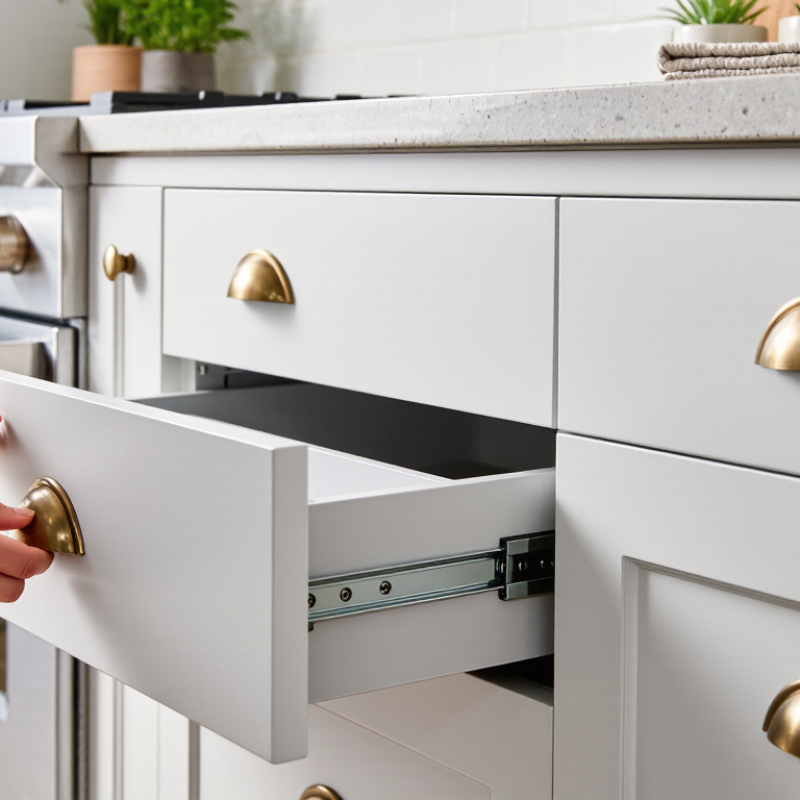
A high-quality cabinet hardware brand is defined by measurable performance, not a polished showroom display. The ANSI/BHMA A156.9 standard evaluates cabinet hardware for endurance, strength, and finish performance. Under this standard, Grade 1 drawer slides are tested for up to 100,000 open-and-close cycles. That figure offers a useful benchmark for busy kitchens, where drawers may be opened repeatedly each day. Ask for the product’s grade and test documentation, rather than relying on vague claims such as “built to last.”
Materials and construction matter, too. Solid, well-machined components should feel stable, with no sharp edges, loose joints, or uneven movement. A finish should resist everyday fingerprints, cleaning, and moisture near sinks. Check whether the maker publishes care instructions and warranty terms; clear details are a sign of accountable support. Feel matters. A smooth drawer slide is not automatically durable, and a heavy pull is not automatically well made. I would also compare the hardware with the cabinet material and installation method. Even a strong hinge can loosen when screws are poorly seated or the cabinet panel is unsuitable. That detail is easy to overlook.
| Quality Dimension | What to Look For | Why It Matters | Practical Evaluation |
|---|---|---|---|
| Base Material | Clearly identified materials, such as solid brass, stainless steel, zinc alloy, or aluminum, selected appropriately for the product and environment. | Material affects weight, strength, corrosion resistance, and how a piece may wear over time. No single material is best for every application. | Check the product specifications and ask whether the stated material applies to the entire piece or only to a component or surface layer. |
| Construction | Secure joints, consistent dimensions, clean edges, and a solid feel without loose or rattling parts. | Good construction helps knobs and pulls withstand repeated everyday handling and installation. | Inspect samples for gaps, rough edges, uneven seams, or parts that shift when gently handled. |
| Finish Quality | An even, consistent finish with clearly stated care instructions and suitability for the intended setting. | Finishes influence appearance and can affect resistance to tarnishing, corrosion, fingerprints, and cleaning products. | Compare pieces under consistent lighting, check edges and recessed areas, and confirm recommended cleaning methods. |
| Moving Components | For hinges and drawer slides, smooth movement, secure attachment, and operation without binding or excessive noise. | Hardware with moving parts is used repeatedly, so consistent operation is an important indicator of usability. | Open and close the component several times, and check published load ratings and adjustment instructions where applicable. |
| Ergonomics | Comfortable grip, appropriate projection, and shapes that are practical for the intended users and cabinetry. | Comfort and ease of use matter in frequently accessed kitchens, bathrooms, and storage areas. | Try the hardware in person when possible, or compare its dimensions with the cabinet door or drawer it will serve. |
| Installation Compatibility | Accurate dimensions, suitable fasteners, clear installation guidance, and stated center-to-center measurements for pulls. | Correct sizing and compatible fixings make installation more reliable and help avoid unnecessary drilling or replacement. | Measure existing holes and cabinet thickness, then verify the product dimensions and supplied screw details before ordering. |
| Durability Evidence | Specific, verifiable information about performance testing, material composition, or finish testing rather than vague durability claims. | Evidence makes it easier to assess whether a product is appropriate for its expected frequency of use and environment. | Ask for test methods, test conditions, or technical documentation, and compare like-for-like information across products. |
| Consistency and Support | Consistent dimensions and finish across a collection, accessible specifications, replacement-part information, and clear care guidance. | Consistency is useful when outfitting multiple cabinets or matching hardware later; good documentation supports installation and maintenance. | Review the available technical details and confirm whether matching pieces or replacement components can be identified by specification. |