

10 Best Hotel Chairs for Global Buyers
A hotel chair is more than a place to sit. It shapes a guest’s first impression, supports daily operations, and must withstand repeated use. Global buyers also face varied room sizes, climates, budgets, and maintenance needs. The right choice depends on where the chair will go: a lobby lounge, a guest room, or a busy dining area. Small details matter. A stable frame, smooth edges, and easy-clean upholstery can make a difference during a long service day.
The scale of travel makes these decisions worth careful attention. UN Tourism’s World Tourism Barometer, published in January 2025, estimated 1.4 billion international tourist arrivals in 2024, about 99% of the 2019 level. Arrivals are not the same as hotel stays or furniture purchases, but they show the reach of global travel demand. For buyers comparing a Chair Hotel supplier or product range, that context supports practical questions: Can the design suit different markets? Are replacement parts available? Does the material perform in the intended setting?
This guide reviews ten hotel chairs through useful purchasing criteria, including comfort, construction, appearance, upkeep, and value. Product specifications should be checked against real samples and the supplier’s documentation. A polished image can hide a poor fit. And one honest caveat: no single chair works everywhere. Weigh the room, guest profile, cleaning routine, and delivery conditions before ordering. When possible, test a sample in the space where guests will actually use it.
How to Evaluate Hotel Chairs for Commercial Use
For commercial hotel use, evaluate chairs beyond their appearance. A graceful silhouette may suit a lobby, yet feel uncomfortable after a long dinner. Check seat height, depth, back support, and arm clearance against the tables they will serve. Small details matter. Ask for frame and joint specifications, plus guidance on cleaning and repair. Upholstery should resist routine spills and frequent wiping without becoming rough or faded. Confirm dimensions, packed weight, and stacking options before comparing freight costs. A sturdy chair still needs to be practical to move and store.
Tips: Request a sample or inspect a showroom model. Sit in it for several minutes, then check for wobble on a hard floor. Review written care instructions and replacement-part availability. Ask how performance claims were tested; vague answers are a reason to pause.
Consider who will use each chair and how often staff will handle it. A dining chair may need a different balance of comfort and cleanability than one in a guest room. Compare the warranty terms, expected maintenance, and consistency between sample and production units. One easy-to-miss issue is noise: feet scraping across tile can disturb nearby guests. No single chair suits every property, and a checklist cannot replace a real seating test.
Key Chair Types and Their Best Hotel Applications
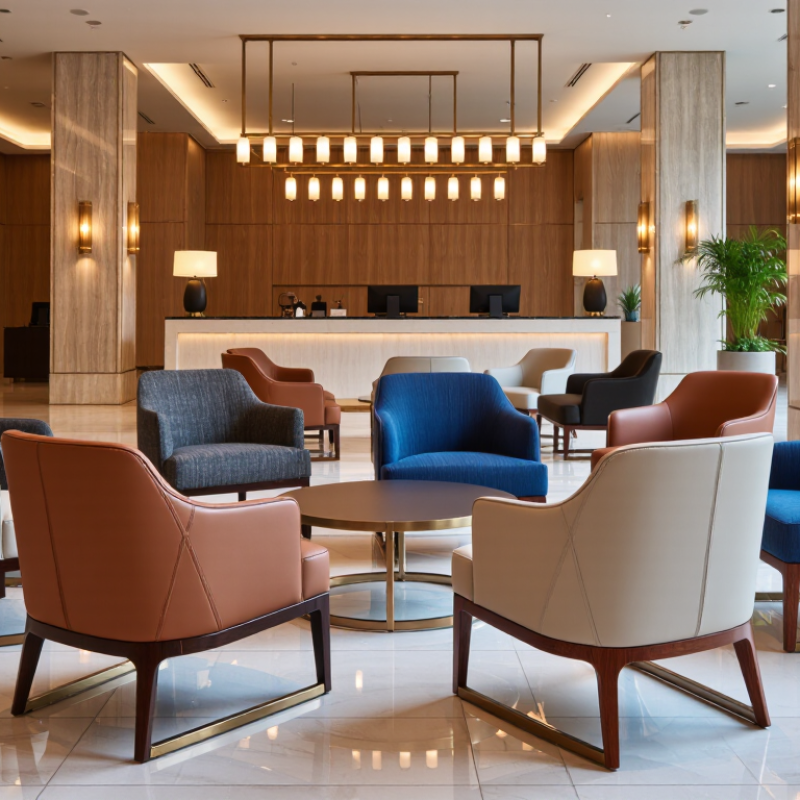
Hotel chairs should match the pace and purpose of each space, not just its color scheme. In lobbies, lounge chairs with supportive arms help guests settle in while keeping pathways clear. A low seat can look inviting, but it may be difficult for older guests to rise from. Small details matter.
Dining areas usually need side chairs that are light enough for staff to move between tables. Upholstered seats soften the room, while wipeable finishes can simplify daily cleaning. For breakfast rooms with frequent turnover, stackable chairs may save storage space. They can feel less substantial, though, so check frame stability and noise when chairs are moved across the floor.
Guest rooms benefit from compact occasional chairs or a small desk chair, depending on available floor space. In suites, a pair of lounge chairs can create a practical conversation area. Banquet and meeting rooms call for consistent, stackable seating that is comfortable through longer sessions. Test samples with the actual table height and flooring; a chair that feels fine in a showroom may scrape, wobble, or crowd a hotel room. Upholstery, dimensions, and maintenance needs also vary by market, so local guest expectations deserve attention. That part is easy to overlook.
Ten Hotel Chairs Compared by Design, Comfort, and Durability
For global hotel buyers, ten chair types reveal how design, comfort, and durability rarely align perfectly. An upholstered armchair feels welcoming in a lobby, but its fabric may need frequent cleaning. A wingback adds privacy and visual weight, while a slipper chair fits tighter guest rooms. Looks matter. Bentwood and molded-plastic chairs are light and easy to move, making them practical for cafés. Metal-frame side chairs often withstand busy dining areas, though hard seats can tire guests.
Padded dining chairs offer more comfort during long meals, but seams and light-colored covers can show wear. Stackable banquet chairs save storage space and suit flexible event rooms; check that stacked frames do not scrape easily. Lounge chairs invite guests to stay longer, yet deep seats may be difficult for some people to rise from. Cane-back chairs bring texture and airflow, but delicate weaving may need more careful handling. Not always an easy trade-off.
Compare seat height, usable seat depth, frame joints, and upholstery cleanability before ordering. A chair that looks sturdy in a photograph can feel unstable on a hard floor. Test samples with different body sizes, and inspect the underside as well as the finish. Ask suppliers for care instructions and relevant material or load-test documentation. These checks take time, and one sample cannot represent every production batch, so confirm specifications on the final order.
| Chair Type | Typical Overall Dimensions (W × D × H) | Typical Seat Height | Common Materials | Design Profile | Comfort (1–5) | Durability (1–5) | Maintenance | Best Hotel Uses |
|---|---|---|---|---|---|---|---|---|
| Upholstered Side Chair | 45–55 × 50–60 × 78–90 cm | 44–48 cm | Wood or metal frame; fabric, vinyl, or leather upholstery | Classic, adaptable dining-room silhouette | 4/5 | 3–4/5 | Vacuum fabric regularly; wipe cleanable upholstery with a suitable mild cleaner. | Guest-room desks, restaurant dining, and meeting rooms |
| Upholstered Tub Chair | 65–80 × 60–75 × 70–85 cm | 40–46 cm | Timber or metal frame; molded foam; fabric or coated upholstery | Curved wraparound back with a compact lounge feel | 4/5 | 3–4/5 | Check upholstery cleaning guidance; inspect seams and frame joints routinely. | Lobby seating, bedroom corners, and lounge areas |
| Dining Armchair | 55–65 × 55–65 × 78–92 cm | 44–48 cm | Wood or metal frame; optional upholstered seat and back | More substantial dining chair with supportive arms | 4/5 | 4/5 | Wipe frame regularly; clean upholstery according to its material and finish. | Hotel restaurants, private dining, and executive suites |
| Stackable Banquet Chair | 43–50 × 50–60 × 88–98 cm | 44–48 cm | Steel or aluminum frame; fabric or vinyl seat and back | Lightweight, functional design, often with a padded seat | 3/5 | 4–5/5 | Clean upholstery as required; check glides, joints, and stacking alignment. | Ballrooms, conferences, and flexible event spaces |
| Bentwood-Style Chair | 40–48 × 48–55 × 75–90 cm | 44–47 cm | Steam-bent or molded wood; optional upholstered seat | Curved, visually light profile suited to classic or modern interiors | 3/5 | 3–4/5 | Dust and wipe with a wood-appropriate cleaner; protect the finish from standing moisture. | Cafés, casual restaurants, and compact dining areas |
| Slipper Lounge Chair | 60–75 × 65–80 × 68–82 cm | 38–44 cm | Timber or metal frame; foam cushioning; upholstered fabric or vinyl | Low, armless lounge chair with a relaxed profile | 4/5 | 3–4/5 | Vacuum or spot-clean upholstery; keep floor glides in good condition. | Guest rooms, reading corners, and boutique-style lobbies |
| Task Chair | 58–70 × 58–70 × 90–115 cm | Adjustable, typically 42–55 cm | Metal or reinforced polymer base; mesh or upholstered seat and back | Adjustable, work-focused design; may include casters and lumbar support | 4–5/5 | 4/5 | Clean mesh or upholstery as specified; periodically check adjustment parts and casters. | Guest-room workstations and hotel business centers |
| Outdoor Stackable Chair | 45–60 × 50–65 × 75–90 cm | 43–47 cm | Powder-coated metal, treated timber, or outdoor-grade polymer | Weather-conscious, easy-to-move design; often stackable | 3/5 | 4/5 | Rinse or wipe as appropriate; inspect finishes and hardware for wear from exposure. | Patios, poolside dining, and outdoor terraces |
| Bar Stool | 40–50 × 45–55 × 90–110 cm | Counter: 60–67 cm; bar: 72–78 cm | Metal or wood frame; optional upholstered seat and footrest | Tall, compact seating; may have a backrest or swivel seat | 3–4/5 | 3–4/5 | Wipe high-touch surfaces; check footrests, fasteners, and swivel parts where fitted. | Hotel bars, breakfast counters, and high-top tables |
| Wingback Lounge Chair | 75–90 × 75–90 × 100–115 cm | 42–48 cm | Timber frame; foam cushioning; fabric or leather upholstery | Tall, enveloping back with a formal statement-making shape | 4/5 | 3–4/5 | Vacuum upholstery and clean according to material; inspect high-wear edges and seams. | Lobby focal points, suites, and quiet lounge areas |
| Scores are general comparative assessments, not certified test results. Confirm exact dimensions, load limits, fire-safety requirements, upholstery specifications, and care instructions with the individual product supplier before purchase. | ||||||||
How Global Markets Shape Materials and Compliance Needs
For global hotel buyers, a chair is more than a shape and fabric swatch. Climate, cleaning routines, shipping distance, and local fire-test requirements all affect material choices. Textile Exchange’s Materials Market Report 2024 estimates that global fiber production reached 124 million tonnes in 2023, with polyester making up 57%. That scale matters: upholstery specifications can influence durability, replacement frequency, and the demand for virgin or recycled fibers. Small details matter. A tightly woven fabric may suit busy lobbies, while a lighter, breathable blend can feel better in warm rooms—but neither is ideal everywhere.
Compliance also changes across markets and venue types. Buyers should confirm the required fire tests, labeling, chemical restrictions, and documentation for each destination before approving a chair. A certificate from one market may not satisfy another. The UNEP 2023 Global Status Report for Buildings and Construction attributes 37% of global energy- and process-related CO2 emissions to the sector in 2022. That figure is not specific to furniture, but it reinforces why fit-out teams increasingly examine material sourcing and product life. One trade-off is easy to miss: recycled content sounds persuasive, yet performance, traceability, and repairability still need checking. The paperwork can be less elegant than the chair.
How to Select Suppliers and Plan International Purchasing
Selecting hotel chairs for international projects starts with the supplier, not the catalogue. Request a production sample, material specifications, carton dimensions, and written warranty terms. Check frame joints, upholstery seams, and floor glides in person. The World Bank’s 2023 Logistics Performance Index assessed 139 economies across six areas, including customs, infrastructure, and shipment timeliness. Use its country-level indicators to compare likely shipping routes, but verify current transit times with forwarders.
Plan purchases around the full landed cost. UNCTAD’s Review of Maritime Transport 2024 reports that more than 80% of world trade by volume travels by sea, so port delays can affect opening schedules. Ask suppliers to state lead time, minimum order quantity, packaging method, and delivery terms in the quotation. Confirm destination-market requirements for furniture materials and labeling before production. A low unit price can hide costly rework. Even a good sample may not represent every production batch.
Tips: Request photos of packed cartons and a pre-shipment inspection. Test one chair for stability and comfort, then review the result with hotel staff. Keep spare glides and upholstery swatches on hand. One detail is easy to miss: confirm that replacement parts can be ordered later.
Hotel Chair Supplier Selection: Suggested Evaluation Weights
A practical scorecard for global hotel buyers planning international purchases.
These percentages are suggested planning weights, not measured industry statistics. Adjust them to reflect project requirements, destination-market regulations, and purchasing priorities.

