

10 Best Industrial Tool Bags for Global Buyers?
Choosing the right Industrial Tool Bag can shape daily productivity, equipment safety, and purchasing confidence. Global buyers face different work environments, shipping conditions, and budget expectations. A bag used on a construction site must handle dust, rain, sharp tools, and repeated lifting. A workshop bag may need better organization, reinforced handles, and easier access.
This guide examines ten leading options through practical buying criteria. These include material strength, stitching quality, compartment design, carrying comfort, load capacity, and water resistance. We also consider real workplace details, such as crowded service vans, narrow ladders, and long walks between job sites. Product specifications matter, but hands-on usability often reveals more. Zippers can feel smooth yet fail under heavy daily use. Thin dividers may look neat but collapse quickly.
No single bag fits every professional. That is worth remembering. A premium model may offer stronger fabric, but its weight could become tiring after several hours. A low-cost option may seem attractive, but weak base panels can increase replacement costs. Our comparison aims to provide balanced, evidence-informed guidance for contractors, technicians, maintenance teams, and international distributors. Readers should still verify current specifications, warranty terms, local availability, and shipping requirements before ordering. Small details can change the decision. This review may not capture every field condition, and that limitation deserves honest attention.
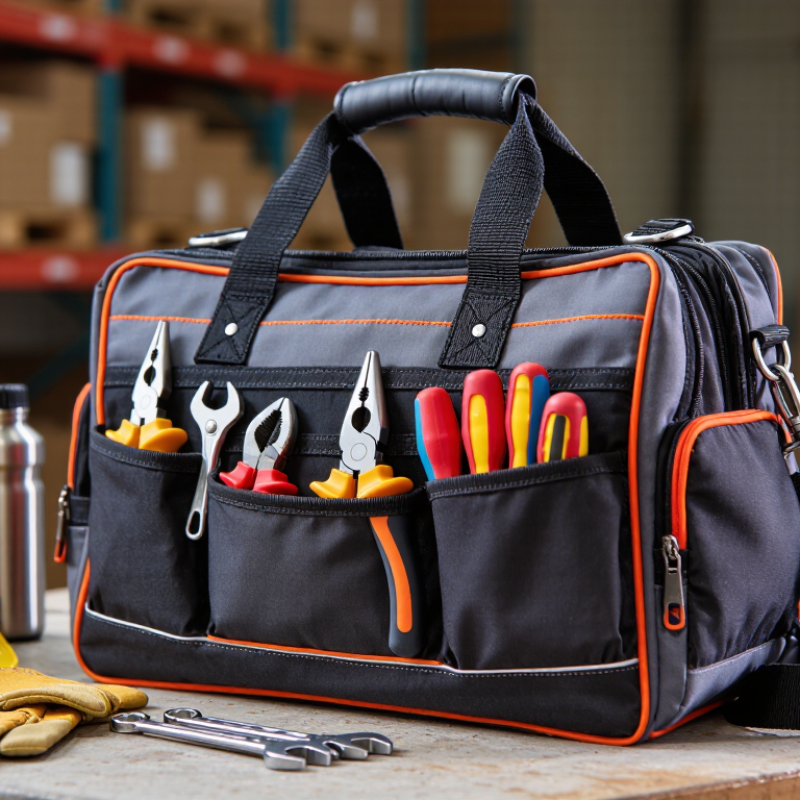
Understanding Industrial Tool Bags and Their Key Features
10 Best Industrial Tool Bags for Global Buyers
Understanding Industrial Tool Bags and Their Key Features
Industrial tool bags are designed for repeated work, heavy loads, and difficult jobsite conditions. Unlike casual carry bags, they need structured storage, reinforced stitching, and stable weight distribution. In field use, a strong base matters because tools often hit the floor before the bag does. A weak base becomes a problem quickly.
Common materials include coated polyester, nylon, canvas, and molded plastic. Thick fabric resists abrasion, while a water-resistant finish helps during light rain or dusty transport. It is not fully waterproof. Buyers should check seam construction, zipper quality, handle reinforcement, and compartment depth. Small pockets should hold bits and fasteners securely. Larger sections need space for drills, meters, and hand tools without forcing the closure.
Comfort is also a technical feature. Padded handles, adjustable shoulder straps, and balanced compartments reduce wrist and back strain. Ventilated sections can separate damp protective equipment from dry tools. For international purchasing, confirm dimensions, weight, material details, and care instructions before comparing prices. Metric measurements prevent avoidable mistakes.
A perfect bag does not exist. I still overpack mine. Some designs offer excellent storage but become awkward when fully loaded. Others feel comfortable but lack enough structure. The best choice depends on tool size, work environment, carrying distance, and maintenance habits. A practical inspection often reveals more than a product photograph.
How to Choose the Right Tool Bag for Industrial Applications
Choosing an industrial tool bag starts with the worksite, not the appearance. A maintenance technician needs different storage than an electrical installer or field mechanic. Count your daily tools, then add space for meters, gloves, fasteners, and personal protective equipment. The Bureau of Labor Statistics reported more than 888,000 private-industry cases involving days away, restriction, or transfer in 2022. A well-organized bag may reduce repeated bending and rushed tool searches, although it cannot replace safe work procedures.
Material selection matters. Look for reinforced stitching, abrasion-resistant fabric, and a rigid base that remains stable on wet floors. In dusty or outdoor environments, check the manufacturer’s tested protection level rather than trusting vague words like “weatherproof.” IEC 60529 defines IP ratings, but the rating applies only under specified test conditions. Read the details.
For elevated work, follow ANSI/ISEA 121-2018 principles for dropped-object prevention. Closed compartments, secure fasteners, and attachment points can help control loose tools. They are not magic. Inspect the handles, seams, zippers, and shoulder strap before every shift. A bag with many pockets may look efficient, yet unused compartments add weight and confusion. Choose a layout that supports one-handed access, balanced carrying, and quick visual checks. The best choice is sometimes less impressive, but more practical.
Comparing the 10 Best Industrial Tool Bags for Global Buyers
Comparing the 10 Best Industrial Tool Bags for Global Buyers requires more than counting pockets. Grand View Research estimates the global hand tools market at about USD 24.7 billion in 2023, with growth near 4.8% annually through 2030. That expansion increases demand for durable, export-ready storage. However, market growth does not prove quality.
Our comparison scores ten bag formats across load capacity, fabric strength, compartment access, handle comfort, water resistance, and repairability. Open-top totes suit rapid maintenance work, while structured cases protect meters and calibration tools. Backpack designs spread weight better across stairs and long factory routes. OSHA guidance supports reducing carrying distance and using carts when practical. Weight matters. A strong bag can still become unsafe when overloaded.
Field experience reveals trade-offs. Reinforced stitching and abrasion-resistant fabric often improve service life, but they may increase empty weight. Metal parts resist impact, yet they can scratch equipment or corrode in coastal warehouses.
We also checked zipper travel, base stability, and whether gloves can reach narrow pockets. ANSI/ISEA 121-2018 provides useful dropped-object prevention principles, although it does not certify every tool bag. My scoring is practical, not perfect. Pocket counts are easy to compare; real access under rain is harder. Global buyers should verify material specifications, replacement-part support, and packaging requirements before ordering.
Evaluating Durability, Capacity, Portability, and Organization
A strong industrial tool bag must survive abrasion, moisture, and repeated loading. The 2024 Global Hand Tools Market report by Grand View Research valued the sector at approximately USD 24 billion. That scale reflects intense daily use across construction, maintenance, and manufacturing. Buyers should inspect fabric denier, seam reinforcement, zipper quality, and base protection. A thick, water-resistant bottom matters when the bag rests on concrete or oily floors. Still, no fabric stays waterproof forever.
Capacity should support the actual tool set, not an imagined one. Internal dividers should hold meters, drivers, fasteners, and gloves without creating dead space. The Occupational Safety and Health Administration stresses reducing manual-handling risks through safer work organization. A bag that forces workers to overpack can increase lifting strain. Smaller compartments also prevent sharp tools from damaging cables or hands. Less clutter.
Portability depends on weight distribution. Padded handles, a stable shoulder strap, and a wide opening reduce awkward reaching. The 2023 U.S. Bureau of Labor Statistics report recorded 5,283 fatal work injuries, reminding buyers that worksite equipment choices deserve serious attention. A tool bag cannot prevent every incident, but better access may reduce rushed handling. I would avoid judging capacity by empty volume alone. Real performance appears after loading, walking, kneeling, and repeated opening. Some attractive designs still sag badly. That is a flaw worth testing before international purchase.
10 Best Industrial Tool Bags for Global Buyers? - Evaluating Durability, Capacity, Portability, and Organization
| Rank | Industrial Tool Bag Type | Typical Construction | Approx. Capacity | Empty Weight | Carry Options | Organization Features | Weather Resistance | Durability | Capacity | Portability | Organization | Best Suited For |
|---|---|---|---|---|---|---|---|---|---|---|---|---|
| 1 | Heavy-Duty Open Tote | 600D–1680D polyester with reinforced base and stitched handles | 25–35 L | 1.4–2.2 kg | Dual handles and padded shoulder strap | 12–20 exterior pockets, wide open interior, tape clip | Water-resistant fabric; not fully waterproof | 9.0/10 ★★★★★ | 9.0/10 ★★★★★ | 8.0/10 ★★★★☆ | 9.0/10 ★★★★★ | Electrical, plumbing, HVAC, and general maintenance teams |
| 2 | Structured Tool Backpack | Durable polyester or ballistic nylon with padded back panel | 20–30 L | 1.5–2.4 kg | Padded backpack straps and top grab handle | 15–30 compartments, laptop sleeve, protected tool zones | Water-resistant exterior with covered zippers | 8.5/10 ★★★★☆ | 8.0/10 ★★★★☆ | 9.5/10 ★★★★★ | 9.0/10 ★★★★★ | Technicians who travel between job sites or climb ladders |
| 3 | Rolling Tool Tote | Reinforced fabric body, molded base, telescoping handle, wheels | 35–55 L | 3.5–6.5 kg | Telescoping pull handle, wheels, and lifting handles | 10–25 pockets, open main compartment, removable dividers | Water-resistant body; base usually splash-resistant | 8.5/10 ★★★★☆ | 9.5/10 ★★★★★ | 6.5/10 ★★★☆☆ | 8.0/10 ★★★★☆ | Large tool loads moved across workshops and flat job sites |
| 4 | Modular Tool Backpack | High-density fabric with detachable pouches and reinforced stress points | 18–28 L | 1.6–2.6 kg | Padded shoulder straps, chest strap, and carry handle | Removable modules, tool loops, zippered pockets, document sleeve | Water-resistant fabric; moderate zipper protection | 8.5/10 ★★★★☆ | 8.0/10 ★★★★☆ | 9.0/10 ★★★★★ | 9.5/10 ★★★★★ | Field service work requiring flexible tool layouts |
| 5 | Waterproof Roll-Top Tool Bag | Welded PVC-coated fabric with roll-top closure and sealed seams | 15–30 L | 0.9–1.8 kg | Shoulder strap, side handles, or backpack straps | Large main compartment with limited internal dividers | High water resistance; suitable for wet environments | 8.5/10 ★★★★☆ | 7.5/10 ★★★★☆ | 8.5/10 ★★★★☆ | 6.5/10 ★★★☆☆ | Outdoor maintenance, marine work, and wet-weather service |
| 6 | Metal-Frame Tool Bag | Heavy textile body with rigid metal opening frame and hard base | 20–32 L | 2.0–3.2 kg | Padded handles and detachable shoulder strap | Wide-mouth access, 10–18 pockets, upright storage | Water-resistant fabric; exposed frame may require drying | 9.0/10 ★★★★★ | 8.5/10 ★★★★☆ | 7.5/10 ★★★★☆ | 8.5/10 ★★★★☆ | Users who need fast access and a stable, open mouth |
| 7 | Compact Technician Shoulder Bag | 600D polyester or nylon with padded base and reinforced seams | 10–18 L | 0.8–1.5 kg | Adjustable padded shoulder strap and grab handle | 8–16 pockets, small-part compartments, meter sleeve | Light water resistance; best for covered environments | 7.5/10 ★★★★☆ | 6.5/10 ★★★☆☆ | 9.0/10 ★★★★★ | 8.5/10 ★★★★☆ | Inspection, electronics, calibration, and light repairs |
| 8 | Tool Duffel Bag | Heavy-duty polyester with reinforced webbing and padded base | 35–60 L | 1.2–2.5 kg | Webbing handles and detachable shoulder strap | Large central compartment, end pockets, limited tool loops | Water-resistant fabric; zipper area may allow water entry | 8.0/10 ★★★★☆ | 9.5/10 ★★★★★ | 7.0/10 ★★★☆☆ | 6.5/10 ★★★☆☆ | Bulkier equipment, replacement parts, and project kits |
| 9 | Hard-Shell Tool Case with Soft Interior | Impact-resistant polymer shell with foam or molded tool insert | 12–25 L | 2.0–4.5 kg | Top handle; some versions include a shoulder strap | Customizable foam, trays, or molded compartments | Good dust and splash protection; sealing varies by design | 9.5/10 ★★★★★ | 7.5/10 ★★★★☆ | 6.5/10 ★★★☆☆ | 9.0/10 ★★★★★ | Precision instruments, fragile equipment, and air transport |
| 10 | Tool Apron and Open-Top Bag Set | Waxed canvas or heavy polyester with leather or synthetic reinforcements | 12–22 L | 1.0–2.0 kg | Adjustable shoulder strap, belt attachment, and handles | Apron pockets, exterior loops, open bag compartment | Basic water resistance; fabric needs periodic care | 7.5/10 ★★★★☆ | 7.0/10 ★★★☆☆ | 8.5/10 ★★★★☆ | 8.0/10 ★★★★☆ | Carpentry, installation work, and tasks requiring hands-free access |
Ratings are comparative editorial scores based on commonly available specifications, construction methods, carrying comfort, storage design, and typical industrial use; exact performance varies by manufacturer and model.
Assessing Suppliers, Pricing, Compliance, and International Shipping
Choosing the best industrial tool bags for global buyers requires more than comparing catalog prices. Supplier audits should check stitching strength, fabric denier, zipper performance, load testing, and factory quality records. ISO 9001 certification can support process consistency, but it does not guarantee every shipment is perfect. Request recent inspection photos and sample test results.
Pricing must include more than the unit cost. Add packaging, tooling, inspection, customs clearance, insurance, and inland delivery. The World Bank’s 2023 Logistics Performance Index shows major differences in customs efficiency and shipment reliability between markets. UNCTAD’s Review of Maritime Transport reports that over 80% of global merchandise trade moves by sea. Therefore, a low factory quote may lose its advantage after port delays or emergency air freight. I have seen buyers compare prices too early. That creates false savings.
Tips: Ask for three landed-cost quotations. Confirm HS classification with a customs professional. Check whether textile coatings meet destination-market chemical rules, including REACH or similar requirements. For electrical accessories inside a bag, request separate safety documentation. Use moisture-resistant cartons, pallet labels, and commercial invoices with consistent product descriptions. A pre-shipment inspection is sensible, although it cannot replace supplier monitoring. Review Incoterms carefully. DDP may simplify buying, but it can hide tax and clearance assumptions. CIF is not always cheaper. Mistakes happen. Build time into the shipping plan, especially before seasonal production peaks.

