WAREHOUSE & SHOWROOM

15700 Middlebelt Rd
(Between 5 & 6 Mile)
Livonia, MI 48154

(734) 751-4413

HOURS

Now open earlier!
Sunday: 11:00 am – 5:00 pm
Monday: 11:00 am – 6:00 pm
Tuesday: CLOSED
Wednesday: CLOSED
Thursday: 11:00 am – 6:00 pm
Friday: 11:00 am – 6:00 pm
Saturday: 10:00 am – 6:00 pm

10 Best Metal Dinner Plates for Wholesale Buyers

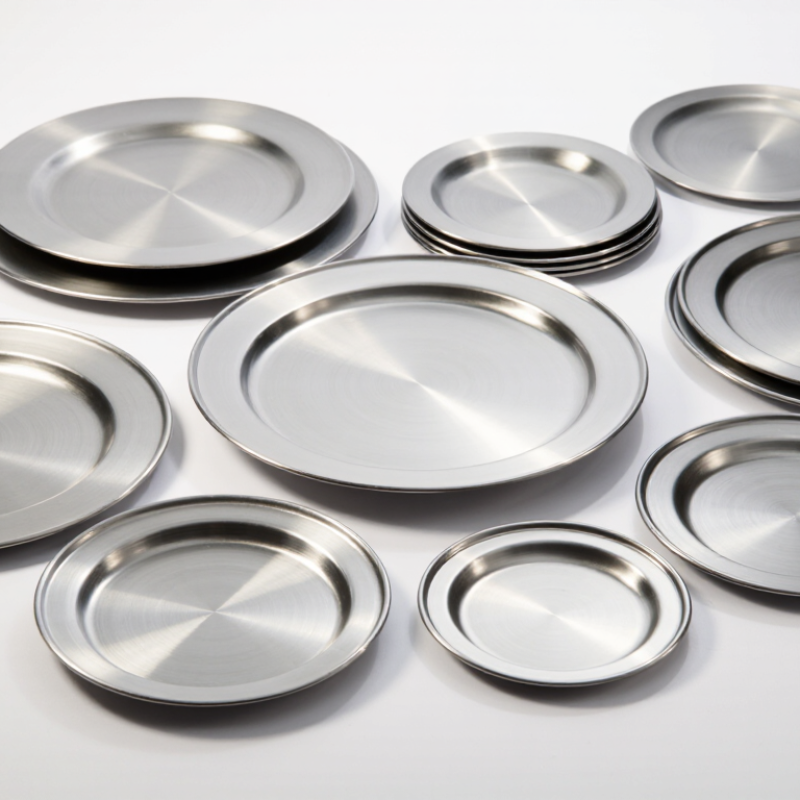
Choosing the right Metal Dinner Plates requires more than comparing photos and wholesale prices. Buyers must examine material grade, thickness, finish, weight, and production consistency. A plate may look elegant online but feel unstable during service. That difference matters in restaurants, hotels, catering businesses, and retail packaging.

This guide reviews 10 Best Metal Dinner Plates for Wholesale Buyers through practical purchasing criteria. We consider stainless steel quality, corrosion resistance, edge safety, stackability, cleaning requirements, and packaging protection. Sample testing remains essential. Hold each plate, check its balance, and inspect the rim for sharp points or uneven polishing. Small defects can become expensive when ordering thousands of units.

No plate is perfect.

Some models offer excellent durability but feel heavier for daily handling. Others look refined yet show fingerprints or surface marks quickly. Wholesale buyers should compare supplier certifications, factory experience, minimum order quantities, lead times, and replacement policies. Clear product specifications are more dependable than attractive marketing claims.

The selected Metal Dinner Plates are assessed for commercial value, not short-term appearance alone. Real-world use can reveal weaknesses that product descriptions miss. Testing with hot meals, repeated washing, and stacked storage provides better evidence. Even experienced buyers may overlook packaging strength, especially during international transport. Careful sampling and written quality agreements can reduce avoidable risks. These details support more confident sourcing decisions and help match each plate with its intended market, service style, and budget.

10 Best Metal Dinner Plates for Wholesale Buyers

Metal Grades Explained: 18/8, 18/10, 304, and 430 Stainless Steel

For wholesale buyers, stainless steel grade matters more than a polished product photo. In practical kitchen testing, 18/8 and 18/10 plates usually offer strong corrosion resistance and a clean, lasting finish. The numbers describe chromium and nickel content. Eighteen percent chromium supports rust resistance, while eight or ten percent nickel improves durability and surface stability.

Many 18/8 and 18/10 plates are based on 304 stainless steel, but the labels are not always interchangeable. 304 is a defined material grade with dependable performance around moisture, food acids, and repeated washing. Check the mill certificate, product specification, and plate thickness before placing a large order. A bright surface can hide weak forming or thin edges.

430 stainless steel contains chromium but little or no nickel. It is magnetic. This grade can reduce purchasing costs and performs well in dry dining areas, buffet service, and moderate indoor use. However, it may show stains sooner in salty or humid conditions. A magnet test helps, but it cannot prove the complete grade. I once treated magnetism as final evidence; that assumption was too simple. Ask for independent testing when consistency matters. Check rolled rims, underside finishing, warping, and sample plates after several wash cycles. Small defects multiply quickly across wholesale quantities.

Food-Contact Safety: FDA 21 CFR and EU 1935/2004 Compliance

10 Best Metal Dinner Plates for Wholesale Buyers

Food-Contact Safety: FDA 21 CFR and EU 1935/2004 Compliance

For wholesale buyers, the best metal dinner plates are not simply the brightest or heaviest. They should match the intended food, temperature, cleaning method, and service environment. Stainless steel plates often offer strong corrosion resistance and easy cleaning. Aluminum may reduce weight, but its coating and food-contact suitability need closer review. Decorative finishes can also wear faster than expected.

Ask suppliers for material specifications, food-contact declarations, and recent migration test reports. FDA 21 CFR compliance depends on the metal, coating, adhesive, and intended use. It is not a universal approval for every plate. In the European Union, Regulation (EC) No 1935/2004 requires food-contact materials to avoid harmful transfer and preserve food quality. Good manufacturing controls and traceability also matter.

Check whether testing covers acidic foods, salty dishes, heat, and repeated washing. Look for clear limits on use, including oven, microwave, and dishwasher restrictions. A supplier should identify the alloy or coating instead of using vague terms like “food grade.” Documentation should connect the test sample to the actual production material. This detail is easy to miss. No checklist is perfect, either. Buyers should inspect edges, welds, scratches, and surface changes after practical washing trials. A plate that passes paperwork but fails daily handling creates costly returns. Reliable sourcing combines laboratory evidence, factory records, and hands-on evaluation before placing a large order.

10 Best Metal Dinner Plates for Wholesale Buyers – Food-Contact Safety: FDA 21 CFR and EU 1935/2004 Compliance

Comparative specifications are practical wholesale buying benchmarks. Final food-contact compliance depends on the exact alloy, coating, manufacturing process, intended food conditions, and supplier test documentation.
Rank Plate Configuration Primary Material Typical Diameter Typical Thickness Approx. Weight per Plate Surface and Edge Design Commercial Strength Recommended Wholesale Use FDA 21 CFR Verification Route EU 1935/2004 Verification Route Key Documents to Request
1 Classic stainless-steel flat dinner plate 304 stainless steel 10–11 in / 25.4–27.9 cm 0.7–1.0 mm 300–500 g Brushed or mirror finish; rolled safety rim Excellent corrosion resistance and high impact tolerance Hotels, catering, institutional dining, buffets Confirm compliance with applicable food-contact requirements, including 21 CFR 174.5 and any applicable material or coating provisions; obtain migration or extractives data where required. Confirm compliance with Regulation (EC) No. 1935/2004, GMP Regulation (EC) No. 2023/2006, and applicable metal-release limits for the intended market. Material certificate, food-contact declaration, migration or extractives report, coating declaration if applicable, traceability records
2 Heavy-duty stainless-steel coupe plate 304 stainless steel 10–12 in / 25.4–30.5 cm 1.0–1.5 mm 500–850 g Deep-drawn coupe profile; polished rim Very high durability with reduced bending during service High-volume restaurants, banquet halls, cruise and catering operations Use the same FDA food-contact verification route as other stainless-steel articles; verify that polishing compounds, passivation chemicals, and any decorative coatings are suitable for food contact. Verify overall framework compliance and test metal release under the actual contact conditions, especially for acidic or salty foods. Alloy grade report, surface-treatment declaration, food-contact declaration, migration test, production batch traceability
3 Lightweight stainless-steel rimmed plate 430 stainless steel 9–10.5 in / 22.9–26.7 cm 0.5–0.8 mm 220–400 g Fine brushed finish; raised anti-spill rim Good rigidity and cost efficiency; lower corrosion resistance than 304 School cafeterias, workplace canteens, outdoor events Confirm the exact alloy and food-contact suitability under applicable FDA requirements; verify that the surface does not release harmful substances under intended use. Obtain metal-release testing and a declaration confirming compliance with Regulation (EC) No. 1935/2004 and applicable national requirements for metals and alloys. Alloy certificate, metal-release report, food-contact declaration, cleaning-chemical compatibility information
4 Premium corrosion-resistant steel plate 316 or 316L stainless steel 10–11 in / 25.4–27.9 cm 0.8–1.2 mm 350–600 g Mirror polish; rounded hygienic rim Superior resistance to chlorides, salt, and acidic service environments Seafood restaurants, premium hospitality, institutional kitchens using aggressive cleaners Request food-contact documentation for the exact alloy, finishing process, and any coatings; confirm compliance under the intended temperature and food-contact conditions. Verify overall compliance with Regulation (EC) No. 1935/2004, GMP requirements, and applicable metal-release limits through representative testing. Alloy composition certificate, metal-release test, food-contact declaration, surface-finish specification, cleaning validation information
5 Hard-anodized aluminum dinner plate Aluminum with hard-anodized surface 9–11 in / 22.9–27.9 cm 1.0–1.5 mm 280–520 g Dark or natural anodized finish; rolled rim Lightweight with improved surface hardness compared with untreated aluminum Outdoor catering, transport meals, institutional service Require documentation for the exact aluminum alloy and anodized surface; verify applicable FDA food-contact clearance, extractives, and restrictions for acidic or salty foods. Require specific migration or metal-release data for the finished article and confirmation that the anodizing process meets the intended food-contact conditions under Regulation (EC) No. 1935/2004. Aluminum alloy certificate, anodizing specification, migration report, food-contact declaration, use-limit instructions
6 Enamel-coated steel dinner plate Low-carbon steel with vitreous enamel coating 9–11 in / 22.9–27.9 cm 0.8–1.2 mm steel body 350–650 g Gloss enamel surface; rolled or coated rim Good stain resistance and strong visual appeal; vulnerable to chipping from severe impact Camping supply, casual dining, hospitality gift and tableware programs For resinous or polymeric components, verify applicable FDA coating requirements such as 21 CFR 175.300 where relevant; also assess enamel composition, heavy metals, and migration under intended use. Verify coating and substrate compliance under Regulation (EC) No. 1935/2004; request specific migration and heavy-metal release data for the finished article. Coating composition, heavy-metal test, migration report, thermal-shock specification, chip-resistance and care instructions
7 Perforated stainless-steel mess plate 304 stainless steel 9–10 in / 22.9–25.4 cm 0.6–0.9 mm 280–450 g Raised compartments; smooth punched or formed edges Efficient portion separation and strong stackability Buffets, meal-preparation services, hospitals, schools Confirm the stainless-steel food-contact route and ensure that forming lubricants, polishing residues, and any passivation treatments are removed or suitable for food contact. Verify metal-release performance of the finished formed article and compliance with Regulation (EC) No. 1935/2004 and applicable GMP requirements. Alloy certificate, forming and cleaning specification, metal-release test, food-contact declaration, dishwasher-cycle data
8 Stackable stainless-steel rim plate 304 stainless steel 10–12 in / 25.4–30.5 cm 0.6–1.0 mm 300–540 g Reinforced rim; anti-jam stacking ring; satin finish High storage efficiency and reliable automated dishwashing performance Hotels, hospitals, catering warehouses, large-scale dining facilities Confirm the complete food-contact article, including any anti-scratch ring or non-metal component, meets applicable FDA requirements and does not transfer substances to food. Request a declaration covering every food-contact component and representative migration testing under the intended time and temperature conditions. Component list, material declarations, migration report, dishwasher durability report, traceability documentation
9 Hammered-finish stainless-steel plate 304 stainless steel 10–11 in / 25.4–27.9 cm 0.7–1.0 mm 320–560 g Decorative hammered surface; polished outer rim Good durability with a premium handcrafted appearance Restaurants, event venues, specialty table-service programs Verify that surface texturing does not trap residues and that polishing, passivation, and decorative treatments comply with applicable FDA food-contact requirements. Confirm cleanability and metal-release performance of the textured finished surface under Regulation (EC) No. 1935/2004 requirements. Alloy certificate, surface-treatment declaration, migration or metal-release report, cleanability validation, care instructions
10 Two-tone stainless-steel plate with decorative exterior 304 stainless steel with food-contact-safe exterior finish 10–11 in / 25.4–27.9 cm 0.7–1.1 mm 330–580 g Food-contact interior with brushed or polished exterior decoration Strong presentation value when decorative layers are isolated from food Banquet service, premium catering, themed hospitality collections Verify that all food-contact surfaces meet applicable FDA requirements and that paints, lacquers, plating, or decorative layers cannot contact food during normal or foreseeable use. Request a complete declaration for the finished article and migration testing for the food-contact surface and any potentially exposed decorative layer. Layer construction drawing, coating or plating declaration, migration report, abrasion test, food-contact compliance statement

Wholesale purchasing note: FDA 21 CFR and EU Regulation (EC) No. 1935/2004 compliance cannot be established from the material name alone. Buyers should approve the finished article only after reviewing the exact alloy or coating specification, intended food types, temperature and time conditions, cleaning chemicals, migration or metal-release testing, and a current food-contact declaration.

Durability Testing: ASTM A967 Passivation and ISO 9227 Corrosion Standards

For wholesale buyers comparing the 10 best metal dinner plates, corrosion evidence matters more than polished photographs. World Stainless reported approximately 62.2 million tonnes of stainless steel production in 2024. That scale reflects strong demand, but it does not guarantee equal plate performance. Alloy grade, surface finish, forming stress, and cleaning residues still influence durability.

ASTM A967/A967M evaluates stainless-steel passivation through methods including water immersion, high humidity, salt spray, and copper sulfate testing. A passing result shows that free iron and surface contamination are controlled under the selected method. It does not prove unlimited service life. Ask suppliers for the exact test method, solution, exposure time, and lot traceability. Vague certificates deserve caution.

ISO 9227 defines neutral salt spray, acetic acid salt spray, and copper-accelerated salt spray procedures. Neutral salt spray commonly uses a 5% sodium chloride solution at 35°C. However, ISO 9227 does not establish universal pass/fail periods. Buyers must specify exposure duration and corrosion-rating criteria before comparing samples. A plate with deep scratches may fail earlier than an identical plate with an intact finish. Realistically, factory test panels can miss damage caused by stacking, cutlery impact, or trapped food salts. Inspect returned samples, not only laboratory reports. Performance claims should remain modest.

Wholesale Evaluation: 0.5–1.0 mm Gauge, MOQ, Packaging, and Unit Cost

10 Best Metal Dinner Plates for Wholesale Buyers

Wholesale Evaluation: 0.5–1.0 mm Gauge, MOQ, Packaging, and Unit Cost

For wholesale buyers, metal dinner plates need more than an attractive finish. Gauge strongly affects stiffness, weight, and resistance to dents. Plates near 0.5 mm are lighter and cheaper, but may flex during stacking. Around 0.8–1.0 mm usually feels more stable in restaurants and catering settings. I recommend requesting samples before approving a large order. Hold each plate by its rim. A weak rim often reveals poor forming quality.

MOQ can change the real buying decision. A low unit price may require 1,000 pieces, while smaller orders can carry higher labor and packaging costs. Ask whether the MOQ applies per size, finish, or total shipment. Confirm the unit cost with decoration, cartons, inner separators, and inspection included. Some quotes look clear, but hidden packing fees appear later. That is frustrating, and buyers should question it early.

Tips: Request a packing test with stacked plates, corner protection, and drop simulation. Each plate should arrive without scratches or bent edges. Compare carton dimensions because freight charges may exceed the metal cost. Check whether the supplier records gauge tolerance, not only the target thickness. A 0.8 mm plate may vary in practice. That detail deserves attention.

Top 10 Metal Dinner Plates Ranked by Safety, Durability, and Wholesale Value

10 Best Metal Dinner Plates for Wholesale Buyers

Top 10 Metal Dinner Plates Ranked by Safety, Durability, and Wholesale Value

This ranking weighs food safety, service life, stackability, and landed cost. The FDA Food Code 2022 calls for food-contact surfaces that are smooth, corrosion-resistant, nonabsorbent, and easy to clean. World Steel Association’s World Steel in Figures 2024 records about 1.89 billion tonnes of crude steel production in 2023. That scale supports stable sourcing, but it does not prove plate safety.

The top ten are:

  1. 304 stainless steel
  2. 316 stainless steel
  3. 430 stainless steel
  4. divided 304 steel
  5. rimmed 304 steel
  6. hard-anodized aluminum
  7. anodized aluminum
  8. enamel-coated steel
  9. titanium
  10. tin-free coated steel

304 offers the strongest balance for most wholesalers. 316 resists salt and acidic exposure better, but costs more. 430 is economical and durable, though less corrosion-resistant. Divided and rimmed designs improve portion control and handling. Anodized aluminum reduces surface reactivity. Coated products need careful inspection. Chips are not minor.

Tips: Ask for material certificates, migration-test results, and cleaning instructions. Check NSF/ANSI 2 compatibility where commercial food service applies. Request sample plates before ordering. Measure weight, rim strength, nesting height, and surface scratches. Test them after repeated washing. A cheaper plate may fail earlier. I have found that packaging damage is often underestimated, especially with thin rims and loose cartons. Supplier claims should be verified independently.