

2026 Best Pilates Chair for Home and Studio Use?
A pilates chair can support focused strength, balance, and mobility work, but the right model depends on how and where it will be used. A compact home setup has different needs from a busy studio. Measure the available floor space first, including room to step onto the pedals and move around the frame. Small details matter.
This 2026 guide looks at what makes a chair practical for both settings: frame stability, pedal resistance, adjustment options, dimensions, and ease of maintenance. Resistance should feel controlled, and the chair should remain steady during common movements. Check the manufacturer’s weight guidance and assembly instructions before buying. For shared studio use, durable upholstery and straightforward adjustments can save time between clients. At home, storage and noise may matter more than a wide range of settings.
Specifications only tell part of the story. A low price may come with fewer adjustments, while a heavier model can be awkward to move. Neither is automatically a deal-breaker. The best choice is the one that fits your space, experience, and training plan—not simply the one with the most features. This comparison will help readers weigh those trade-offs and identify questions worth asking before purchase. No chair suits everyone. And product details can change, so verify current specifications with the seller.
What a Pilates Chair Is and How It Supports Training
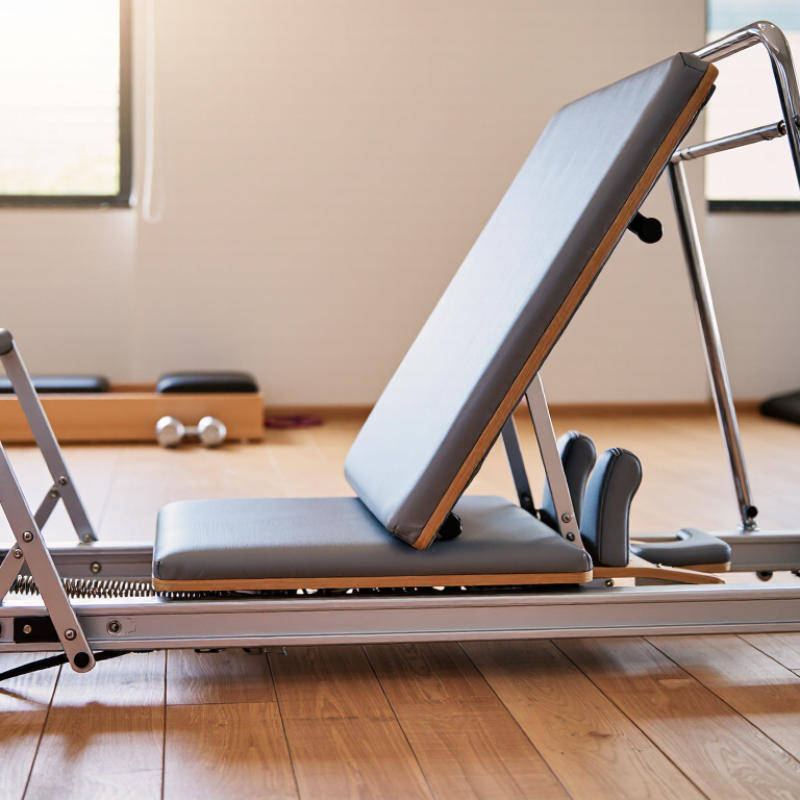
A Pilates chair is a compact training apparatus with a padded seat, one or two movable pedals, and adjustable springs. Some models include handles for balance. Pressing the pedals against spring resistance lets you practise controlled movement while seated, standing, or supporting yourself with your hands. The chair takes up less floor space than many larger Pilates machines. It can look simple. Its small base, however, makes careful setup important.
Chair exercises can challenge the legs, arms, and trunk while asking you to coordinate breath and movement. A slow pedal press may train control more effectively than a quick, heavy push. Spring settings vary, so choose resistance that allows smooth movement without straining or losing balance. The chair can complement mat work, but it is not automatically easier or suitable for every body. A practical drawback: beginners may find the narrow seat and moving pedal awkward at first. Guidance from a qualified instructor can help with positioning and safe progressions.
Tips: Place the chair on a level, non-slip floor and check that its springs and pedals are secure. Start with light resistance, keep movements small, and stop if you feel sharp pain or dizziness. Don’t rush the setup.
| Training Dimension | What It Is | How It Supports Training | Home and Studio Considerations |
|---|---|---|---|
| Basic chair design | A Pilates chair is a compact exercise apparatus generally built around a seat, a movable pedal, and a resistance system. Specific designs and included features vary. | The pedal moves against resistance, providing a platform for controlled pushing and pressing exercises. | Its compact form can suit spaces where a larger Pilates apparatus may not fit. Check the assembled dimensions and required clearance before choosing a model. |
| Spring resistance | Many chairs use springs to create pedal resistance. The number of springs, adjustment options, and resistance levels differ by design. | Resistance lets users perform controlled movements against a load. Changing the setup, where supported, can alter the challenge. | Review the adjustment method and manufacturer instructions. Resistance settings are not standardized across chairs, so settings may not be comparable between models. |
| Lower-body pressing | Seated or standing exercises may involve pressing the pedal with the feet. | These movements can train the legs and hips while requiring controlled movement and balance. | Beginners may benefit from learning the movement with guidance. Use a stable setup and avoid forcing the pedal through an uncontrolled range. |
| Upper-body pressing | Depending on the exercise and chair design, users may press the pedal with their hands or arms. | Pressing variations can challenge the arms, shoulders, and trunk while the user controls the moving pedal. | Check that the exercise is appropriate for the user’s experience and that any handles or hand supports are fitted and used as directed. |
| Trunk control and balance | Some chair exercises use seated, kneeling, or standing positions while the pedal moves. | Maintaining alignment during movement can require coordination, balance, and trunk control. | Standing variations can be demanding. A clear surrounding area and appropriate instruction are especially important for balance-focused exercises. |
| Exercise variety | Chair routines can include different positions and movement patterns, depending on the apparatus and the user’s training plan. | Changing body position and the direction of the press can provide varied movement challenges using one piece of equipment. | Available exercises depend on the chair’s design, accessories, and the user’s technique. Follow the equipment manual and qualified instruction. |
| Space and placement | Chairs are generally designed to occupy less floor space than many larger Pilates machines, though exact footprints vary. | A dedicated, level workout area helps the user mount, operate, and dismount the apparatus safely. | Measure the chair and allow room around it for the intended exercises. Place it on a stable surface and follow any floor-protection guidance. |
| Setup and safety checks | Moving pedals and resistance components require correct setup and routine inspection. | Following setup instructions helps ensure the apparatus is used as intended during controlled exercise. | Before use, check that the chair is stable and inspect springs, connections, and moving parts as directed by the manufacturer. Stop using damaged equipment. |
| Choosing for home use | Home suitability depends on available space, storage needs, resistance options, and the user’s experience. | A well-matched chair can support regular practice without requiring a large dedicated workout room. | Compare dimensions, weight, adjustment features, assembly requirements, and care instructions rather than relying on appearance alone. |
| Choosing for studio use | Studio suitability depends on intended class use, user turnover, adjustment needs, and maintenance requirements. | A chair can add a distinct resistance-based apparatus to a Pilates training space. | Consider durability information, ease of adjustment, inspection requirements, and whether the design fits the studio’s teaching approach. |