How to Choose the Right Types of Wood Screw Heads?
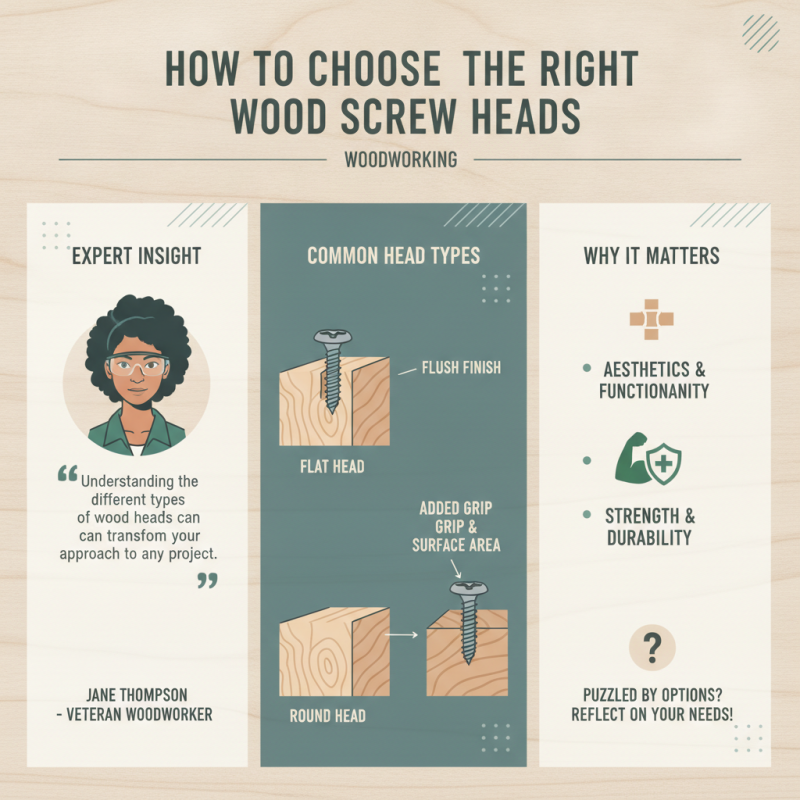
Choosing the right Types Of Wood Screw Heads is crucial for successful woodworking projects. According to Jane Thompson, a veteran expert in woodworking, "Understanding the different types of wood screw heads can transform your approach to any project." Her insight highlights the importance of making informed choices.
Wood screws come in various head shapes, each designed for specific applications. For example, flat heads provide a flush finish, while round heads are ideal for added surface area and grip. Many novice woodworkers overlook these details, which can lead to less-than-ideal results.
Selecting the proper types of wood screw heads affects both aesthetics and functionality. The right choice can enhance the look of your project and ensure strength and durability. However, mastering the nuances of wood screw heads is not easy. Many beginners find themselves puzzled by the options, leading to mistakes. It’s essential to reflect on your needs and preferences, as this knowledge will aid you in making the best decision.
Understanding Different Wood Screw Head Shapes
When selecting wood screws, understanding head shapes is crucial. Different head types serve various purposes and offer distinct advantages. For example, flat heads sit flush with the wood surface. This design is ideal for applications where a smooth finish is desired. On the other hand, pan heads provide a rounded appearance. They are useful when a protruding screw is acceptable or preferred.
In a recent industry report, it was noted that approximately 68% of woodworkers prioritize screw head shape when making their selections. This reflects the importance of aesthetics and function in woodworking projects. Research also shows that countersunk screws create a more finished look. However, they may require special drilling techniques.
Tips:
Consider using star or Torx heads for better grip and reduced slippage. These types are increasingly favored due to their ease of use. Additionally, pay attention to the depth of the screw head. A deeper head can provide a more secure hold in softer woods.
While choosing wood screws, reflection on your project's specific needs is necessary. Different screws can yield vastly different results. For critical projects, testing various types may lead to better outcomes.
How to Choose the Right Types of Wood Screw Heads? - Understanding Different Wood Screw Head Shapes
| Screw Head Shape | Description | Best Use Cases | Advantages |
| Flat Head | Sits flush with the surface material. | Used in applications where flush surface is required. | Reduces the risk of snagging; provides a clean finish. |
| Phillips Head | Cross-shaped indentation for better grip. | Common in a variety of woodworking projects. | Minimizes slippage; easily driven with power tools. |
| Torx Head | Star-shaped drive for improved torque. | Ideal for heavy-duty applications. | Provides more torque without stripping; reduces wear on tools. |
| Round Head | Dome-shaped head for decorative purposes. | Used in furniture and visible structures. | Aesthetic appeal; easier to insert in soft materials. |
| Pancake Head | Thin profile suitable for joining surfaces. | Used in tasks where space is limited. | Very low profile; avoids protrusion. |
Evaluating the Functionality of Various Screw Head Types
When choosing wood screw heads, consider their functionality. Different screw heads serve different purposes, and knowing these can help make an informed decision. For example, flat heads lie flush with the material, offering a smooth surface. This is ideal for a clean finish but may not provide as much grip as others.
Countersunk heads are similar, allowing the screw to be installed below the surface. They are useful in woodworking where aesthetics matter. Round heads are often easier to drive in, but they protrude, which may not be suitable for all projects.
Tip: Always match the screw head type to the task. A secure hold is crucial, especially in weight-bearing applications.
When evaluating screws, consider how they interact with other materials. Some heads require specific drivers. Make sure you have the right tools. Regularly check your screws for wear. A loose screw can lead to project failures or hazards.
Tip: Experiment with different screw heads. You may find a better option for your work. Reflect on your past choices to improve future projects.
Assessing Aesthetic Considerations in Screw Head Selection
When selecting screw heads, aesthetics play a vital role. The preferred screw head contributes significantly to the overall look of the finished project. According to a report by the Wood Products Council, the visual impact of screw heads can enhance structural elements in both residential and commercial settings. A well-chosen screw head can easily complement the design of furniture or cabinetry, making it an essential consideration.
In practice, various types of screw heads exist, each offering distinct visual characteristics. For instance, flat-head screws blend into surfaces, making them less noticeable. Conversely, rounded or decorative heads can add a stylish touch. A survey of designers showed that 75% prefer screw types that harmonize with the material, demonstrating the importance of visual coherence in design.
However, the quest for the ideal screw head often involves trade-offs. Some users may prioritize aesthetics over functionality, leading to potential long-term issues. For instance, choosing an ornate head in a high-stress application can compromise structural integrity. The best choices balance both visual appeal and mechanical strength. Evaluating these aspects ensures a well-rounded decision that aligns with the desired design ethos.
Exploring Material Compatibility with Wood Screw Heads
Choosing the right type of wood screw heads is essential for a secure and reliable fastening. Material compatibility is crucial when selecting screw heads. Various types of wood have different densities and properties. For example, hardwoods like oak and maple require robust screw heads to prevent splitting. According to industry reports, using proper screw types can enhance structural integrity by up to 30%.
Screw heads also interact uniquely with different materials. For instance, softer woods like pine allow for countersunk screws. This not only provides a flush finish but also minimizes material stress. The right choice can prevent issues, such as screw stripping or wood cracking. Experts suggest that matching screw heads with wood hardness promotes better grip and longevity.
Reflecting on practical applications, it’s important to note that not every project benefits from a one-size-fits-all approach. Some professionals overlook the specifics of their wood choice, leading to potential failures. Historical data shows that nearly 25% of woodworking projects encounter adhesive or fastening issues due to improper material compatibility. This emphasizes the need for careful evaluation before making a selection.
Matching Screw Head Types to Specific Applications
Choosing the right screw head type is crucial for various applications. Different projects require specific screw heads for optimal performance. For instance, flat head screws work well in cabinetry and furniture assembly. These screws sit flush against the surface, preventing snagging. According to a report from the Fastener Quality Act, over 30% of fastening failures can be traced back to improper screw selection.
For electrical applications, pan head screws provide an effective solution. Their rounded top and wider bearing surface prevent stripping and allow for greater torque. Studies indicate that using the correct screw head can enhance the longevity of installations by up to 25%. However, not every screw head type will create a perfect fit. It’s essential to consider materials and conditions.
Moreover, while using socket head screws offers a reliable grip in tighter spaces, they may not provide adequate visual appeal. Many professionals overlook aesthetics when functionality is prioritized. Yet, in visible applications, the right head type can elevate the overall design. Balancing performance with appearance is often a challenging task, prompting discussions among builders and designers alike. Proper selection remains a key yet often neglected aspect.