

How to Choose the Best Bunk Bed Frame?
Choosing the right Bunk Bed Frame is more than comparing prices or admiring a polished product photo. A dependable frame must fit the room, support its users, and remain stable through daily climbing, sleeping, and movement. In practical home evaluations, small details often matter most. Check the ceiling height, mattress dimensions, ladder position, guardrail design, and available floor space. A beautiful frame can still feel unsafe when the top bunk sits too close to the ceiling.
Materials deserve careful attention. Solid wood can offer warmth and strength, while steel may provide a slimmer, modern structure. However, material labels alone prove little. Examine the joints, slats, fasteners, and finish quality. The frame should not wobble when gently tested. Listen for creaking. It may reveal loose hardware, although not every sound signals a serious defect. Manufacturer weight limits, assembly instructions, safety guidance, and warranty terms also deserve close review.
Think about long-term use. Will younger children need a lower ladder? Can the beds separate later? Does the design leave enough space for reading lights or storage? These questions make the choice more personal and more reliable. A trusted seller should provide clear specifications and responsive support, not vague promises. Still, no Bunk Bed Frame is perfect for every household. Room measurements can be missed, and installation can be rushed. Recheck every connection after assembly, then inspect the frame regularly. That extra minute may prevent a bigger problem later.
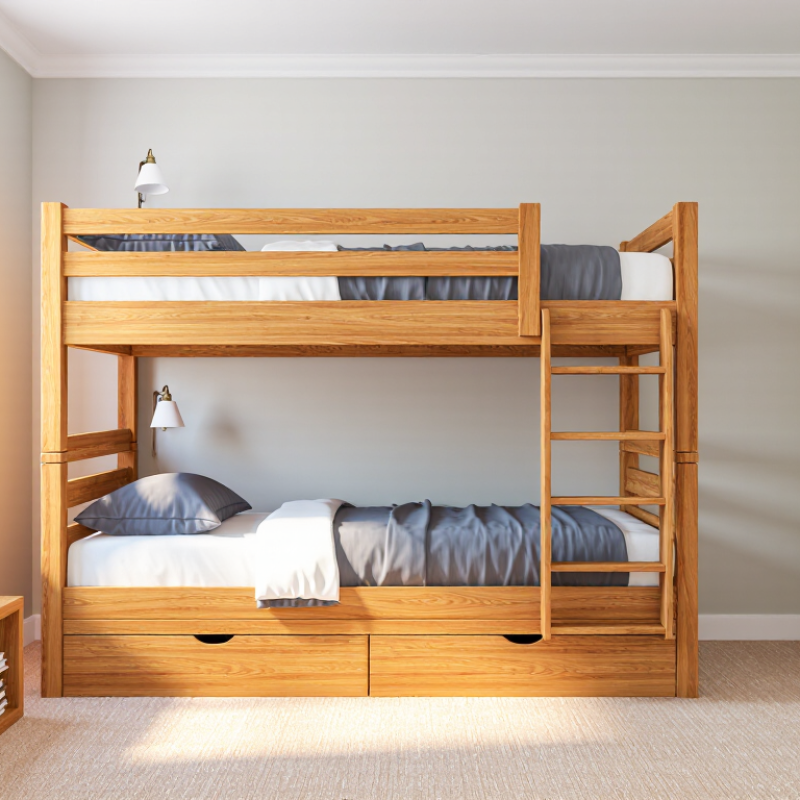
Define Your Space, Sleeper Needs, and Bunk Bed Purpose
How to Choose the Best Bunk Bed Frame?
Start with the room, not the catalog photo. Measure floor length, width, ceiling height, and ladder clearance. Leave space for opening drawers and walking safely. A narrow room may need a straight ladder, while a wider room can accept angled access.
The U.S. Consumer Product Safety Commission has reported roughly 36,000 bunk-bed-related injuries annually. That figure makes clearance and guardrail quality more than design details.
Check whether the frame follows ASTM F1427 requirements for children’s bunk beds.
Then define the sleepers.
A six-year-old, a teenager, and an adult do not create the same demands. Confirm mattress size, weight limits, guardrail height, and slat spacing before buying.
The American Academy of Sleep Medicine recommends 9–12 hours of sleep for children aged 6–12 and 8–10 hours for teenagers.
A thin, uncomfortable mattress can undermine that goal. It sounds obvious. People still overlook it.
Purpose matters too.
Is the bed for siblings, guests, or a compact study room? A fixed bunk may suit daily use, while a convertible frame may serve changing needs. Consider storage, desk access, noise, and future separation.
I once treated ladder position as a minor detail; nighttime movement proved otherwise.
Measure twice. Leave room to rethink the layout. A frame can fit the room and still fit the wrong life.
Compare Bunk Bed Frame Materials, Designs, and Weight Limits
How to Choose the Best Bunk Bed Frame?
Choosing a bunk bed frame starts with its material. Solid wood feels warm, resists daily movement, and can often be repaired after small scratches. Steel frames are lighter and usually provide strong support, but hollow tubing may transmit more noise. Engineered wood can offer a lower price, though damaged edges may swell after moisture exposure. I have assembled frames where loose joints caused annoying creaks. That experience taught me to inspect bolts, welds, and corner connections before judging appearance.
Design affects safety and everyday comfort. A fixed bunk bed suits regular sleeping arrangements, while a convertible model can become two separate beds later. Look for full-length guardrails, a firmly attached ladder, and enough space between the upper mattress and ceiling. Measure the room carefully. A child may sit upright and strike the ceiling if clearance is ignored. A stable frame should not rock when gently pushed from different sides.
Weight limits deserve close attention. Check the manufacturer’s stated capacity for each sleeping level, not just the total frame. Include the mattress, bedding, and the sleeper’s weight. Some ratings assume evenly distributed weight, which may not match real use. Jumping, sudden climbing, or two people sharing one level can create extra force. I once trusted a generous number without checking mattress weight; that was careless. Choose a frame with a clear safety label, detailed assembly instructions, and replaceable hardware. Then recheck every connection after several weeks.
Check Safety Features, Stability, and Recommended Age Requirements
How to Choose the Best Bunk Bed Frame?
Check Safety Features, Stability, and Recommended Age Requirements
A safe bunk bed begins with solid guardrails on the upper bunk. They should extend securely along the sleeping side and remain firmly attached. Check the mattress thickness limit in the instruction manual. A mattress that sits too high can reduce guardrail protection. The ladder should feel steady under both feet. Avoid sharp edges, wide openings, and loose decorative parts. Small details matter.
Stability deserves a practical test. Gently push the frame from several directions before children use it. It should not rock, scrape, or produce clicking sounds. Tighten every connector, and inspect the slats for bending or cracks. Place the bed on a level floor, not a thick rug. Wall anchoring may improve security, especially in active households. Never modify the frame without clear manufacturer guidance.
Age guidance should never be treated as a casual suggestion. Many safety authorities advise that children under six should not sleep on the upper bunk. However, requirements can vary by region and product design. Follow the supplied instructions and consider the child’s climbing ability, balance, and nighttime habits. A careful child may still move unpredictably when half asleep. Recheck the frame every few months. It is easy to miss a loosening bolt. A quiet wobble is still a warning.
Measure the Room and Confirm Mattress and Ceiling Compatibility
How to Choose the Best Bunk Bed Frame?
Measure the Room and Confirm Mattress and Ceiling Compatibility
Room measurements should come before style, color, or ladder design. Measure the floor length, width, and ceiling height with a steel tape. Include baseboards, radiators, ceiling fans, and nearby windows. I once measured the floor area and forgot a ceiling fan. That small mistake changed the entire layout.
Check the manufacturer’s required mattress size and thickness. A mattress that is too thick can reduce guardrail protection. The U.S. Consumer Product Safety Commission’s bunk-bed rule requires guardrails to extend at least five inches above the mattress. It also addresses hazardous openings around the sleeping platform. These details are easy to miss during online shopping. Read the assembly instructions before ordering.
Leave comfortable space above the top mattress. A child should sit without striking the ceiling, light fixture, or fan. Measure from the floor to the ceiling, then subtract the frame height and mattress thickness. The remaining clearance matters. The American Academy of Pediatrics has linked bunk-bed injuries with falls, especially among younger children. Its safety guidance recommends the upper bunk for children aged six and older. Age labels alone are not enough. Consider climbing habits, room lighting, and nighttime movement. A perfect measurement can still fail if the ladder sits beside a crowded desk.
Evaluate Assembly, Maintenance, Warranty, and Long-Term Value
How to Choose the Best Bunk Bed Frame?
A strong bunk bed begins with a clear, manageable assembly process. Check whether the instructions show every step with readable diagrams. Hardware should be labeled, not mixed in one confusing bag. Two adults can reduce mistakes during lifting and alignment. Use a level on the side rails and ladder. Small gaps can become annoying movement later. Guardrails should feel firm when pressed by hand. Confirm the stated weight limits for each sleeping level, including the mattress.
Maintenance affects safety and comfort over time. Tighten bolts after the first week, then inspect them every few months. Look for loose slats, cracked joints, sharp edges, and unusual squeaks. A dry cloth removes dust without swelling wooden parts. Keep the frame away from persistent moisture and direct heat.
I once underestimated how quickly a slightly loose ladder could worsen. That mistake made regular checks feel less optional. Still, inspection schedules are easy to forget.
Read the warranty before buying, especially its exclusions and claim process. A useful warranty explains coverage, duration, replacement parts, and required proof of purchase. Check whether structural joints receive longer protection than cosmetic surfaces. Long-term value improves when the frame supports standard mattress sizes and replaceable components. A model that converts into separate beds may serve changing needs. However, conversion hardware can disappear during a move. Store it in a labeled container. Compare repair costs, cleaning effort, and expected use, not only the purchase price.

