

What Are the Best Faux Wood Wall Panels?
Faux Wood Wall Panels can make a room feel warmer without the weight, upkeep, or cost of solid timber. But “best” depends on where the panels will go. A sunny living-room feature wall has different needs from a steamy bathroom or a busy hallway. Texture matters, too: a deep embossed grain can look convincing up close, while a glossy, repeating print may reveal itself under bright side lighting.
Scale is changing the backdrop. The U.S. Census Bureau reported 1.413 million housing starts in 2023, a useful measure of ongoing residential construction—not proof of panel demand. MarketsandMarkets’ Wood-Plastic Composites Market report offers additional context on a material category used in some wood-look products. These sources help frame the market, but neither ranks every faux-wood panel or verifies its durability. Check product specifications, installation requirements, warranties, and independent emissions documentation before buying. Bring home a sample. View it in morning and evening light.
A trustworthy comparison also needs expert voices. No verifiable, published quotation from a named Faux Wood Wall Panels specialist was available in the supplied material, so this introduction will not invent one. That gap matters. Readers deserve sourced advice, not a polished quote with uncertain origins. The sections ahead will compare panel materials, visual realism, moisture performance, maintenance, installation, and value. The right choice should suit the room’s real conditions—not just the product photo.
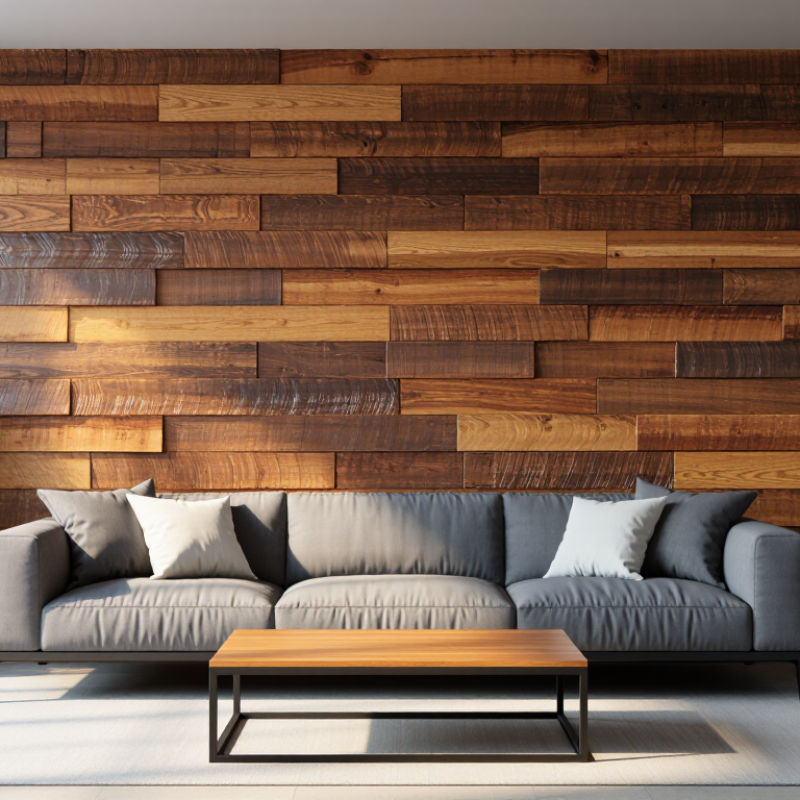
What Faux Wood Wall Panels Are and How They Are Made
What Are the Best Faux Wood Wall Panels?
What Faux Wood Wall Panels Are and How They Are Made
Faux wood wall panels imitate timber’s grain, color, and plank shape without being solid wood. Common versions use PVC, wood-plastic composites, or engineered boards with a printed or embossed surface. Some feel smooth; others have shallow grooves that catch light like cut timber. The label alone does not tell you what is inside.
Manufacturing varies by material. PVC panels are typically formed by heating and shaping polymer, then adding a printed film or textured finish. Wood-plastic composite panels blend wood fibers with thermoplastics, heat the mixture, and press or extrude it into profiles. Engineered boards may receive a decorative laminate or coating. Edges, backing, and surface layers matter: moisture resistance can differ even between panels that look alike.
The wider material market offers useful context, but not a direct measure of wall-panel sales. Grand View Research estimated the global wood-plastic composites market at about $7.1 billion in 2023 and projected 11.5% annual growth from 2024 to 2030. That figure covers many applications, including decking, not wall panels alone. A market forecast is not proof of a panel’s durability. Check the product’s material specification and installation guidance. A small detail, like an exposed cut edge, can reveal more than a showroom sample.
Main Types and Finishes of Faux Wood Wall Panels
Most faux wood panels use PVC, wood-plastic composite (WPC), laminated MDF, or molded polyurethane. PVC is light and wipes clean, so it suits splash-prone areas. WPC feels denser and can handle frequent contact in hallways. Laminated MDF creates crisp grooves and neat board lines, but exposed edges may swell when wet. Polyurethane can show deep knots without heavy panels. Choose by room. A sample beside the actual wall helps reveal undertones that online images hide.
Finishes change the effect as much as the panel material. Embossed grain adds texture under side lighting; painted white or gray finishes soften small rooms. Reclaimed and wire-brushed looks bring visible variation, though repeated printed patterns can feel artificial up close. Grand View Research’s 2024 Wood-Plastic Composites report estimated the global WPC market at about $7.1 billion in 2023 and projected 11.5% annual growth through 2030. That report covers WPC broadly, not wall panels alone; treat it as material-market context, not proof of panel performance. Check the product’s moisture guidance and fire-test documentation before specifying it. Not perfect. A convincing finish still depends on careful seams and believable grain variation.
How to Compare Durability, Cost, and Appearance
Faux wood panels differ in durability, so compare the core material before judging the surface. PVC panels resist splashes and wipe clean, making them practical for kitchens or busy entryways. Foam panels are lightweight and simple to cut, but can dent under a hard knock. MDF often gives a solid feel, yet moisture may cause swelling if edges are left unsealed. Check the product’s care instructions and inspect a sample, not just a photograph.
Upfront price tells only part of the story. Lightweight panels may need fewer fasteners, while heavier boards can require extra labor or wall preparation. Add adhesive, trim, and replacement costs to your estimate. Cheap upfront. Not always cheap later. The comparison is imperfect because installation skill and room conditions affect the final cost. A small sample can reveal whether seams align cleanly and whether the finish marks easily.
Appearance depends on more than color. Look at grain depth, repeating patterns, edge details, and how the surface catches light beside a window. Glossy finishes can look artificial under bright lighting; matte textures may hide small flaws. Stand back several feet before deciding. A realistic grain pattern is useful, but an overly uniform print can still feel flat across a large wall. Order enough panels from one production batch when possible, since shade variation can be noticeable.
Choosing Panels for Different Rooms and Wall Conditions
The best faux wood wall panels depend less on appearance alone than on the room and the wall beneath them. In a dry living room or bedroom, lightweight panels can add warmth without the weight of solid boards. Check how their color looks beside the floor and furniture; a sample that seems honey-colored in a shop may look orange under warm evening bulbs. Small differences matter.
Kitchens and bathrooms need more care. Choose panels specifically rated for the room’s moisture levels, and follow the maker’s installation instructions around sinks, showers, and edges. Not every panel tolerates splashes or frequent cleaning. Keep water away from seams. For a hallway or busy family room, a durable, wipeable surface may be more practical than a deeply textured finish that traps dust.
Wall condition matters just as much. Panels generally need a clean, dry, stable surface; loose paint and damp patches should be addressed before installation. Slightly uneven walls can make narrow seams look crooked, especially in raking light. Check the wall with a level, and ask whether battens or another preparation method are suitable for the panel type. I would test one sample on the actual wall first. It takes time, and it can still be imperfect, but it may prevent a costly mismatch.
What Are the Best Faux Wood Wall Panels?
Illustrative suitability ratings by room (1 = less suitable, 5 = more suitable). Ratings reflect typical material characteristics, not independent product testing.
How to use this chart: PVC and WPC panels are often practical choices for humid rooms, while MDF-based panels are generally better suited to dry spaces. Actual moisture resistance depends on the panel construction, sealed edges, installation, and wall condition. Check the product’s specifications, prepare the wall as directed, and use panels rated for the intended location.
Installation, Cleaning, and Long-Term Care of Faux Wood Panels
Before installing faux wood wall panels, check whether they suit the room’s moisture levels. Not every panel is made for bathrooms or damp basements. Let the panels adjust to the room as directed in their instructions, and start with a clean, dry, reasonably flat wall. Find the studs before marking your layout. A level line helps, but walls are rarely perfect. Leave the spacing recommended by the manufacturer, since some materials expand or contract with temperature changes. Measure twice. Cut once. Wear eye protection when cutting, and clear away dust before fitting each panel.
For routine cleaning, use a soft cloth or microfiber duster. Wipe marks with mild soap diluted in water, then dry the surface with a clean towel. Avoid scouring pads and harsh solvents; they may scratch the finish or change its sheen. Try any cleaner on a hidden spot first. It takes a minute. Grease near a cooking area may need a second gentle wipe rather than harder scrubbing.
Long-term care is mostly about noticing small changes. Check seams, corners, and fasteners every few months, especially after seasonal shifts in humidity. Repair loose sections using a method suitable for the panel and wall beneath it. Keep panels away from persistent leaks, and use window coverings where strong sunlight falls directly on them. Color can fade unevenly. Even careful maintenance cannot prevent every mark, and a slightly imperfect finish may be part of living with the space.
What Are the Best Faux Wood Wall Panels? Installation, Cleaning, and Long-Term Care
| Panel type | Typical characteristics | Installation considerations | Cleaning | Long-term care | Often a good fit for |
|---|---|---|---|---|---|
| PVC or vinyl | Lightweight, moisture-resistant panels are available in wood-look finishes. Surface texture and realism vary by product. | May be installed with compatible adhesive or fasteners, depending on the panel and wall. Leave any expansion gaps specified by the manufacturer. | Wipe with a soft cloth and mild soap solution. Avoid abrasive pads and cleaners that could scratch or dull the finish. | Check seams, edges, and fasteners periodically. Keep away from heat sources unless the product is rated for the location. | Rooms where easy wiping and resistance to everyday moisture are priorities; confirm suitability for the specific room and product. |
| Polyurethane or other rigid foam | Lightweight decorative panels can have molded grain and deeper relief. Durability and surface coatings differ among products. | Often cut with hand tools and attached with a compatible adhesive or mechanical fasteners. A flat, sound substrate helps reduce visible unevenness. | Dust with a soft brush or cloth; clean gently with a damp cloth if the finish permits. Test cleaners in an inconspicuous area first. | Protect the surface from impacts and follow the product’s fire and heat-use guidance. Repair chips with a compatible filler or coating. | Feature walls where low weight and decorative texture are useful. |
| MDF with a wood-look finish | Provides a smooth, consistent surface for printed, laminated, or coated finishes. Standard MDF can swell if exposed to water. | Panels are generally heavier than foam options and may require careful measuring, cutting, and secure fixing to a suitable wall or framework. | Use a dry or lightly damp cloth and dry the surface promptly. Avoid soaking the panel or allowing water to collect at edges and joints. | Maintain intact edge coatings and repair scratches or exposed areas to limit moisture entry. Use only in locations allowed by the product instructions. | Dry interior spaces where a consistent finish and a solid panel feel are desired. |
| Laminate-faced composite panels | A decorative laminate over a core material can offer a repeatable wood pattern and a wipeable face; the core and edge construction affect moisture performance. | Follow the specified fixing system and provide neat, supported edges. Cut edges may need finishing to protect the core and improve appearance. | Wipe with a soft cloth and mild cleaner suitable for the surface. Avoid harsh abrasives and excess water at joints. | Inspect seams and edge treatments for lifting or damage. Keep the panels dry where the core is not rated for moisture exposure. | Interior accent areas needing a uniform pattern and straightforward surface cleaning. |
| WPC (wood-plastic composite) | Combines wood-based material with plastic; composition, weight, finish, and moisture performance vary by product. | Use the recommended clips, screws, or adhesive and account for the panel’s weight and any stated movement allowance. Check that the wall can support the installation. | Usually cleaned with a soft brush or cloth and mild soap solution, subject to the product’s care instructions. | Check fixings and joints over time. Do not assume every WPC panel is waterproof or suitable for exterior use; verify its rating and intended location. | Projects where a composite panel’s appearance and specified performance match the intended interior application. |
Selection tip: The best option depends on the room, wall condition, desired appearance, and product specifications. Before installation, check the manufacturer’s guidance for substrate preparation, adhesive or fastener compatibility, fire rating, moisture limits, and cleaning products.

