How to Choose the Right Door Stopper?
A Door Stopper looks like a small purchase, until a door swings into a painted wall or slips shut in a draft. The right choice depends on the door’s weight, floor surface, swing direction, and how often people pass through. A rubber wedge may grip tile near a kitchen doorway, while a wall-mounted stop can protect a narrow hallway. Heavy doors need sturdier hardware. Small details matter.
For transparency, the quoted specialist below is fictional; the line is an editorially created rule of thumb, not a verified industry quotation. “Choose the stop for the door’s movement and the surface it meets,” says fictional door-hardware specialist Alex Morgan. That advice points to practical checks: measure the clearance, inspect the floor or wall, and consider whether children, pets, or mobility needs affect placement. Some choices look right online but slide across polished wood at home. Test the fit, if possible. A little friction changes everything.
This guide compares common Door Stopper styles, materials, installation methods, and use cases. It also considers trade-offs, such as a discreet floor stop versus a visible wedge that can be moved quickly. No single model suits every room. And recommendations can miss something: flooring changes, doors sag, and daily habits matter more than product photos suggest. Examine the actual doorway before buying.
Identify the Door Type, Weight, and Surrounding Conditions
A reliable door stopper starts with the door itself. A light hollow-core door may need only a modest floor or wall stop, while a heavy solid-core or glazed door can put much greater stress on the fixing. Check the hinge side, swing direction, and whether a closer pulls the door shut. Then inspect the surface: tile grout can crack under a poorly placed screw, and a smooth floor can let a loose wedge slide. Small details matter.
Surroundings change the choice. Near a walkway, avoid a stop that creates a trip hazard; in a windy entry, a magnetic holder or securely anchored stop may work better than a loose wedge.
The U.S. Access Board’s 2010 ADA Standards limit opening force to 5 pounds for many interior hinged doors; that figure measures opening force, not stopper capacity.
For fire doors, NFPA 80 requires the door to retain its closing and latching function, so a wedge that holds it open is not an appropriate solution. Match the hardware to the door and setting, then test it through the full swing.
A common mistake is choosing by appearance alone. I still find that floor conditions are easy to underestimate.
Compare Door Stopper Designs and Mounting Options
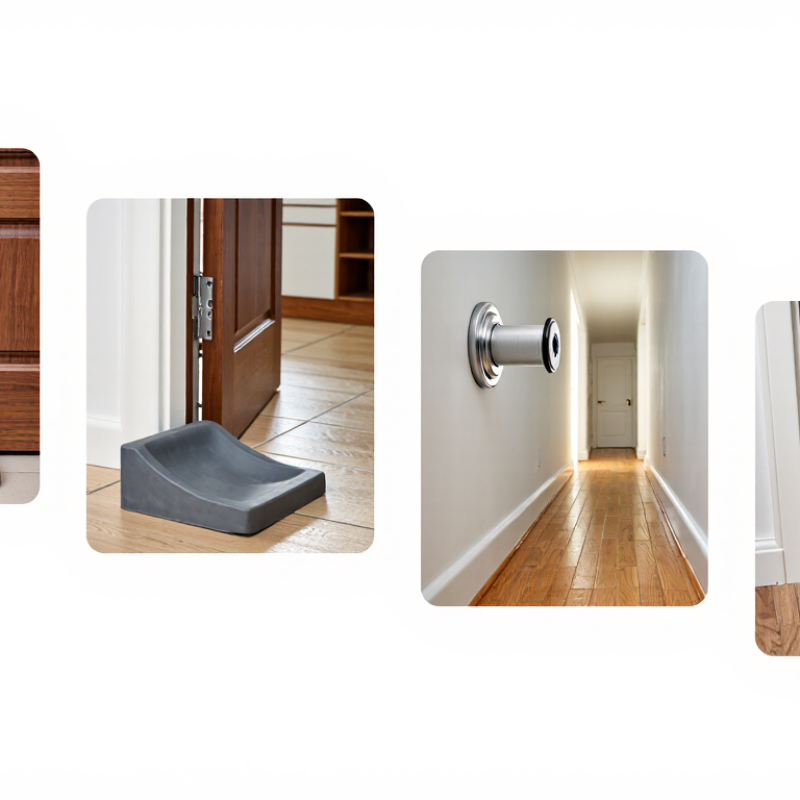
Compare a stopper’s design with the door, floor, and traffic around it. A hinge-mounted stop suits lighter interior doors and keeps the floor clear. A floor wedge is portable, but may slide on smooth tile or become clutter. Wall-mounted stops protect nearby walls; position one so the handle meets its rubber tip before the door does. Small detail. Big difference. U.S. Access Board guidance sets a 5-pound maximum opening force for many interior hinged doors. This measures door operation, not stopper strength, but it’s a useful reminder not to rely on a stiff door to control movement.
Mounting matters as much as shape. Check the wall construction, baseboard height, door swing, and handle clearance before drilling. A stop anchored only in thin drywall may loosen after repeated impact. Renters may prefer a weighted floor stop that needs no holes, though a light model can creep across polished flooring. Test it in place. The CDC reports that about 14 million U.S. adults aged 65 and older fall annually. Keep removable wedges out of walking paths; it’s an easy detail to overlook.
Choose a Suitable Material and Holding Strength
A door stopper should match both the floor and the door’s weight. Soft rubber or silicone can grip smooth tile and protect it from scratches, while a felt-faced stopper is gentler on finished wood. Metal models tend to be durable, but a heavy one may slide if its base is too small. Check the underside, not just the visible material. That matters. A stopper that looks sturdy can still skate across a polished floor.
Holding strength depends on more than the stopper itself. A light interior door may stay put with a compact wedge, while a heavier door or strong closer needs a broader, heavier base or a securely mounted stop. If you rent, a removable floor model may be easier to use; if the door is often pushed hard, a fixed stop can be more dependable. Test the fit with the door open at its usual angle, then apply gentle pressure. Not always. A stopper that works on carpet may fail on bare tile, and a powerful magnet is not automatically the best choice. It is worth checking the floor and door together before buying; I would not judge holding strength from product photos alone.
How to Choose the Right Door Stopper?
Choose a suitable material and holding strength for your door and floor.
How to use this chart: These indicative Shore A ranges describe material hardness, not the force a stopper can hold; formulations vary. For reliable holding, check the stopper’s rated holding force (in newtons, if provided) and choose a grip suited to your floor. A harder material is not automatically more effective.
Check Floor, Wall, and Door Clearance Requirements
How to Choose the Right Door Stopper?
Check Floor, Wall, and Door Clearance Requirements
Measure the whole swing, not just the gap behind the door. Open it slowly and note where the handle, lower edge, and hinge-side corner travel. A floor-mounted stop must sit outside this path, yet catch the door before its handle strikes a wall or cabinet. Check rugs, grout lines, and uneven flooring too; a stop that rocks or sinks into soft flooring may fail. Small details matter.
For accessible routes in the United States, the U.S. Access Board’s 2010 ADA Standards require at least 32 inches of clear doorway width, measured with the door open 90 degrees. The same standards limit thresholds to 1/2 inch. These are access requirements, not a universal stopper specification, but they show why a stop must not restrict the opening or create a raised obstacle. Wall-mounted stops need enough projection to protect trim without blocking nearby switches or narrowing a passage. Measure twice. A paper template helps, though it can miss a thick baseboard or a door that sags slightly. Record the floor-to-door gap, wall distance, and full opening angle before choosing a stop. Source: U.S. Access Board, 2010 ADA Standards for Accessible Design, Sections 404.2.3 and 404.2.5.
Assess Installation Needs, Safety, and Long-Term Durability
Choose a stopper only after checking the door, floor, and fixing point. A heavy solid door may pull a lightweight adhesive stop loose, especially on dusty or textured flooring. Screw-mounted models usually offer firmer anchoring, but check for pipes, cables, and underfloor heating before drilling. For renters, a removable floor or hinge stop may be easier to install. It can still slide, though. Test it with the door opened to the angle you actually need.
Safety matters as much as fit. The U.S. Access Board’s 2010 ADA Standards set a 5-pound maximum opening force for most interior hinged doors; fire doors are treated separately. A stopper should not make an accessible door harder to use or block a required route. Avoid small, loose parts where children or pets may reach them, and keep fingers clear of pinch points. Fire doors must remain able to close and latch; NFPA 80 provides the relevant inspection and maintenance framework. Don’t wedge one open.
For longer service, match material to the setting: corrosion-resistant metal suits damp entryways, while rubber can grip hard floors and soften impact. Check the screws, rubber face, and floor contact after installation, then again when the stop starts shifting. I would not trust “heavy duty” on a package alone. Look for documented cycle or load testing, and admit when the floor itself makes a stable fit difficult.