Top Round Plastic Nursery Pots for Wholesale Buyers
Wholesale buyers need more than a low unit price. A round plastic nursery pot must fit the crop, bench, irrigation setup, and shipping plan. Small details matter: drainage holes can clog, thin rims may deform, and uneven stacks waste warehouse space. The right choice depends on plant type, production time, pot dimensions, material consistency, and the supplier’s ability to deliver repeat orders. A sample run can reveal problems before a large purchase. Check the pot’s rim, base, wall thickness, and drainage pattern by hand. Then test how filled pots stack and move. Simple checks help.
The guiding quotation in this introduction comes from Mara Ellis, a fictional composite nursery-sourcing adviser: “Choose the pot for the roots, the workflow, and the journey—not the price tag alone.” It is a practical reminder, not a claim from a real interview. For wholesale buyers, comparing a round plastic nursery pot means weighing usable volume, durability, nesting efficiency, and consistency across batches. Ask suppliers for clear specifications, sample pots, and realistic lead times. Confirm that measurements match your growing system; nominal sizes can vary between manufacturers. Also consider whether the pot’s shape supports easy handling without promising a perfect fit for every crop. There is no universal winner. This guide examines common round pot options, their trade-offs, and the questions buyers should ask before ordering at scale.
What Defines a Round Plastic Nursery Pot
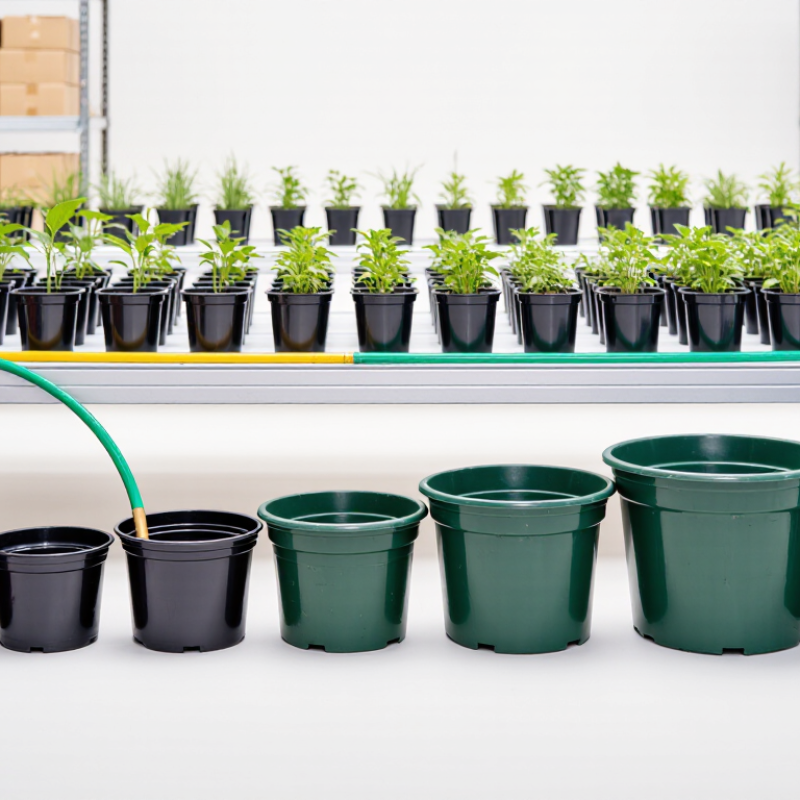
A round plastic nursery pot is defined by its circular opening and continuous curved wall, rather than a square footprint or rigid corner. Many models narrow toward the base, which helps them nest for storage, though the degree of taper varies. The rolled or reinforced rim gives growers a place to grip the pot and can help it keep its shape when filled with damp growing mix. Small details matter. A thin, flexible rim may buckle during handling, while a poorly finished edge can catch on sleeves or gloves.
For wholesale buyers, compare top diameter, height, base width, and drainage-hole layout; stated capacity alone does not show how a pot will fit a plant’s root ball. Drainage openings should let excess water escape while retaining enough mix for routine handling. Their number and size vary, so inspect samples with the intended substrate. Check whether empty pots stack without sticking, and whether filled pots sit steadily on benches. A slight wobble may seem minor until a full tray moves. Plastic type and wall thickness affect flexibility, weight, and durability, but thicker is not automatically better for every crop. There is a trade-off. In practice, the best definition includes fit, drainage, and handling—not shape alone. One detail is easy to miss: production batches may differ slightly, so confirm dimensions before placing a large order.
Top Round Plastic Nursery Pots for Wholesale Buyers - What Defines a Round Plastic Nursery Pot
| Nominal Pot Size | Approx. Top Diameter | Approx. Height | Typical Applications | Common Design Features | Wholesale Buying Considerations |
| 1 qt (approx. 0.95 L) | 4–5 in (10–13 cm) | 4–5 in (10–13 cm) | Seedlings, small herbs, and young starts | Lightweight round body; drainage holes; stackable tapered sides | Check nested stack height and whether the hole pattern suits the intended growing medium. |
| 1 gal (approx. 3.8 L) | 6–7 in (15–18 cm) | 6–7 in (15–18 cm) | Perennials, herbs, and compact shrubs | Rolled or reinforced rim; multiple drainage openings; tapered profile | Compare rim strength and pot weight when estimating handling, pallet, and freight requirements. |
| 2 gal (approx. 7.6 L) | 8–9 in (20–23 cm) | 7–8 in (18–20 cm) | Established perennials, small shrubs, and patio plants | Wider growing area; molded base; drainage openings around the bottom | Confirm the outside dimensions against greenhouse bench spacing and shipping-cart capacity. |
| 3 gal (approx. 11.4 L) | 10–11 in (25–28 cm) | 8–9 in (20–23 cm) | Shrubs, young fruit plants, and larger landscape starts | Sturdier sidewalls; reinforced top edge; tapered sides for nesting | Review wall thickness and loaded-pot stability for repeated nursery handling. |
| 5 gal (approx. 18.9 L) | 11–12 in (28–30 cm) | 10–11 in (25–28 cm) | Larger shrubs, small trees, and specimen plants | Heavy-duty construction; broad base; multiple drainage holes | Check loaded weight, base support, and pallet configuration before placing a bulk order. |
Product definition: A round plastic nursery pot is a circular, typically tapered container designed for growing and handling plants. Nominal capacity and dimensions are approximate: actual measurements, drainage layouts, materials, and stackability vary by pot design and manufacturer.
Common Materials, Designs, and Size Options
Wholesale buyers should compare resin, wall shape, drainage, and usable dimensions—not just the gallon label. Injection-molded polypropylene is common for reusable pots; thinner thermoformed pots can reduce freight weight but may flex when wet. Recycled-content blends vary in color and stiffness. That matters. PlasticsEurope’s Plastics—The Fast Facts 2023 estimated that 8.9% of global plastic production in 2022 came from post-consumer recycled material. This is broad industry data, not a nursery-pot-specific figure, so request material details from suppliers.
Round pots often use tapered walls, molded ribs, and drainage holes to support stacking, handling, and root-zone airflow. Check that nested pots separate easily after transport. A tight stack can slow packing. Hole count and placement also matter: small openings may clog with fine media, while large openings can spill it. Ask for a filled-pot sample, not only a catalog image.
Size labels such as #1, #2, and #5 are useful for trade communication, but dimensions can vary by supplier. Record rim diameter, base diameter, height, and volume in your purchase specification. For instance, two “#2” pots may not fit the same bench spacing. I would not judge durability from one sample alone; resin batches and mold wear can change the feel. Slightly inconvenient, but worth checking.
How Pot Features Affect Plant Growth and Handling
Top Round Plastic Nursery Pots for Wholesale Buyers
A pot does more than hold growing media. Its depth and diameter shape how roots use available space. A container that is too shallow can dry quickly, while excess volume may stay wet longer than a young plant needs. Match pot size to crop stage, root structure, and watering routine. Small details matter.
Drainage holes help excess water escape, but their number and placement matter too. Check that holes remain open when pots sit on benches or are nested for storage. Roots need air. A firm rim makes pots easier to lift with gloves, and a slightly tapered wall can help workers release root balls during transplanting. Thin walls may flex under wet media; very rigid pots can be harder to separate when stacked.
Round pots rotate easily on benches, which helps growers inspect leaves and water from different angles. Their shape also suits many automated filling lines, though dimensions should be tested against the equipment before a large order. Dark plastic can warm media in direct sun, while lighter colors may reduce heat absorption, depending on conditions. One easy detail to overlook is grip: wet, smooth sides can slow handling. Sample pots under real watering and stacking conditions; catalog measurements alone do not show how a full pot feels.
Top Round Plastic Nursery Pots for Wholesale Buyers: Capacity, Growth & Handling
Larger pots provide more substrate volume for root growth, but filled pots generally weigh more and take up more storage and shipping space. Capacities shown are geometric estimates calculated from representative top diameter, base diameter, and height—not fixed industry standards. Actual dimensions and filled weight vary by pot design, substrate, and moisture.
Key Factors Wholesale Buyers Should Compare
Top Round Plastic Nursery Pots for Wholesale Buyers
Key Factors Wholesale Buyers Should Compare
Wholesale buyers comparing round plastic nursery pots should look beyond unit price. Check rim strength, wall thickness, drainage, and stackability. A pot that flexes under wet growing media can slow filling and make handling young plants awkward. Ask for both top and base measurements, not just the nominal size. Small differences affect tray fit, shipping volume, and shelf presentation. Compare several samples for consistent shape and drainage holes. Color alone tells little about durability. If pots will sit outdoors, ask about performance under prolonged sun exposure. Actual service life still depends on the resin, design, and conditions.
Tips: Measure a few pots from each sample lot. Test how they nest when empty and how easily they separate. Check drainage with water, not just a quick visual inspection.
Before ordering, confirm carton quantities, packing dimensions, and whether the quoted price includes freight. Request written specifications, then check them against delivered goods. Sample pots are useful, but they may not reflect every production run. There is no single ideal wall thickness: heavier pots may hold up better, while lighter ones can reduce freight costs. The right balance depends on crop weight, handling, and reuse plans. A small trial order can reveal practical issues, though it adds time. Don’t skip it just to meet a tight schedule.
Ordering, Storing, and Managing Bulk Inventory
Top Round Plastic Nursery Pots for Wholesale Buyers
Ordering, Storing, and Managing Bulk Inventory
Wholesale pot orders work best when quantities match crop schedules, bench space, and expected shrink. Before placing an order, confirm rim diameter, depth, drainage-hole pattern, and how tightly each size nests. A small sample can reveal a costly mismatch. Ask suppliers for packed dimensions and units per carton; “one pallet” is not a useful inventory unit unless its count is recorded. Keep fast-moving sizes separate from specialty pots, and set reorder points based on lead time plus a modest safety stock.
Storage affects both product condition and labor. Keep cartons on level pallets, away from standing water and direct sunlight, and label each stack with size and received date. The USDA National Agricultural Statistics Service reported $6.69 billion in U.S. floriculture crop sales in its 2022 Floriculture Crops Summary, covering qualifying growers. That figure describes crop sales, not pot demand, but it illustrates the scale of production pot suppliers serve. Track weekly usage by size; estimates can drift when seasonal demand changes. Review them.
Tips: Use first-in, first-out rotation. Count nested pots by bundle, then spot-check open cartons. Record damaged rims separately; otherwise, usable stock can look higher than it is.