What Is Sesame White Granite?
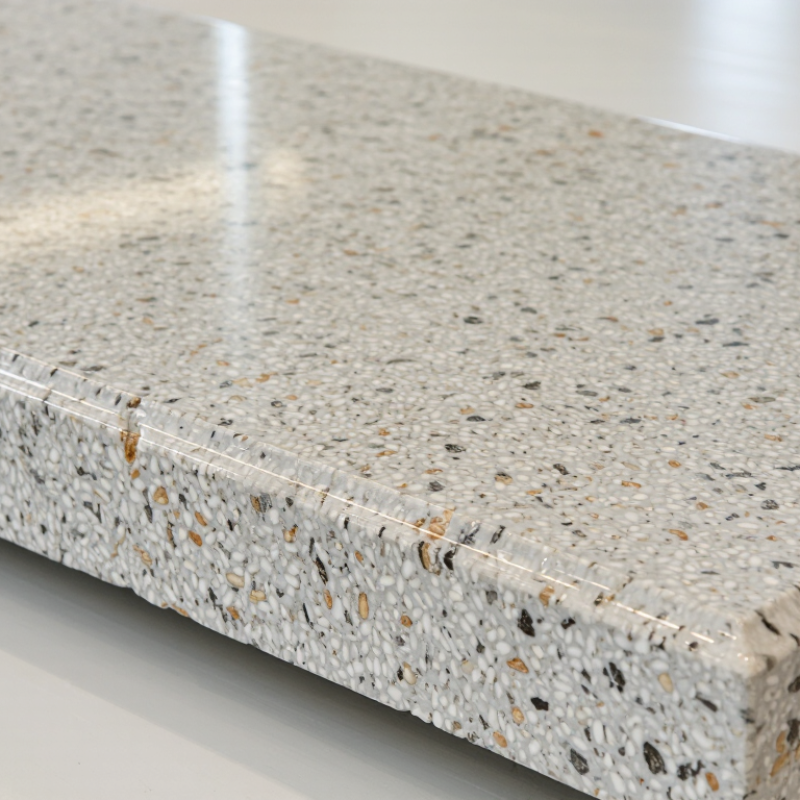
Sesame White Granite is a natural stone valued for its pale background and fine, pepper-like mineral pattern. Small gray, charcoal, and sometimes warm-toned grains give each slab a quietly textured appearance. The name is a trade label, not a guarantee of identical color or origin. Some material is commonly associated with Indian quarries, but buyers should confirm the quarry and documentation with their supplier.
Geologically, granite forms as molten rock cools slowly beneath the Earth’s surface, allowing visible mineral crystals to develop. In a kitchen, bathroom, or commercial interior, Sesame White Granite can provide a bright, practical surface without looking perfectly uniform. That variation is part of its appeal. It can also make matching slabs more difficult. View the actual stone when possible.
Granite is generally hard and resistant to everyday wear, but no stone is maintenance-free. Ask how the slab has been finished and whether it needs sealing; recommendations can differ by product and fabricator. Wipe spills promptly, especially acidic liquids, and use a cleaner suitable for natural stone. Small details matter. The finished result depends on more than the stone itself: lighting, edge profile, seams, and installation all affect its appearance. This guide explains the material’s characteristics, common uses, care needs, and what to check before choosing a slab. One useful caution remains: a sample can suggest the look, but it cannot show every variation across a full slab.
What Is Sesame White Granite?
Sesame White Granite is a natural stone known for its light background and scattered dark mineral grains. Depending on the block, the surface may look ivory, cool white, or faintly gray, with flecks ranging from fine dots to larger marks. These grains create a subtle, speckled pattern rather than a uniform finish. The name can be a little misleading: slabs from different blocks may not match closely. View several slabs together before choosing stone for a large countertop or floor.
Granite’s appearance is only part of the decision. ASTM C615/C615M sets technical requirements for granite dimension stone, including a minimum density of 160 pounds per cubic foot, minimum compressive strength of 19,000 psi, and maximum water absorption of 0.40 percent. These are specification thresholds, not a promise that every Sesame White slab has identical performance. Ask the supplier for test data tied to the stone being sold, and inspect the actual slab for veins, filled spots, and edge consistency. Small differences matter. For kitchens, use a suitable stone sealer when recommended, and clean spills promptly; pale stone can make dark liquids easier to notice.
How Is Sesame White Granite Formed?
Sesame White Granite is a natural stone with a pale background and scattered gray or black mineral grains. Its speckled pattern can resemble sesame seeds. The commercial name describes an appearance, though, and does not guarantee identical mineral proportions in every slab. Some pieces look warmer or more uniform than others.
Its formation begins deep in Earth’s crust, where molten rock cools slowly. This gradual cooling gives minerals time to grow and interlock. Quartz and feldspar commonly form much of the light-colored ground, while darker minerals create the visible flecks. The rock becomes solid granite as these crystals lock together. Later, geological uplift and erosion can expose it closer to the surface, where it may eventually be quarried. That process takes immense time. Still, the trade name can be a little imprecise; deposits vary, and appearance alone cannot confirm a slab’s exact composition.
Tips: View a sample in natural and indoor light before choosing. Ask a stone professional about the specific slab, since a small sample may not show its full pattern. Check the finish, too. It can change how the grains appear.
What Are Its Key Colors and Physical Properties?
What Is Sesame White Granite?
Sesame White granite typically has a pale white or warm gray background, scattered with small dark gray, black, or brown mineral grains. The pattern often resembles pepper sprinkled across a light surface. Some slabs show subtle beige patches or faint movement, while others look more evenly speckled. “Sesame White” is a trade name, so color and pattern can vary between quarries and batches. One slab may look calmer than the next. That variation can make matching pieces tricky.
Its key physical qualities come from its mineral composition, commonly including quartz and feldspar. The stone is generally hard and suitable for busy counters, floors, and other interior surfaces. Still, natural stone is not identical from piece to piece. Porosity, finish, and resistance to staining can vary, so sealing needs depend on the particular slab and its use. Ask a stone professional to assess a sample rather than relying on the name alone. It’s worth checking.
Tips: View a full-size sample in the room’s lighting. Wipe it with water, then look for changes in color or darkening. Confirm care instructions for the selected finish before installation.
What Is Sesame White Granite? - What Are Its Key Colors and Physical Properties?
| Dimension | Description |
| Stone type | A natural, coarse-grained igneous stone sold commercially as granite. Its exact appearance and measured properties can vary between quarries and batches. |
| Base color | Usually a light white, off-white, or pale gray background. |
| Typical pattern | Fine to medium, scattered mineral grains create a speckled appearance. Dark gray or black flecks may contrast with lighter grains; pattern density and grain size vary. |
| Main minerals | Granite commonly contains quartz and feldspar, with smaller amounts of dark minerals such as biotite or amphibole. The precise mineral proportions depend on the stone’s geological source. |
| Texture and finish | An interlocking crystalline texture; commonly supplied polished, honed, or flamed. A polished finish typically makes the grain pattern appear more distinct. |
| Hardness | Granite minerals vary in hardness; quartz is about 7 on the Mohs scale. This does not make the stone immune to scratching, chipping, or damage at edges. |
| Density | Many granites fall roughly within 2.63–2.75 g/cm³. This is a general granite range, not a guaranteed Sesame White measurement. |
| Water absorption | Often low in sound granite, but the value varies with porosity, mineral composition, and processing. Request a batch-specific test result when absorption performance matters. |
| Strength and durability | Granite is generally strong and durable, but strength depends on the particular slab, its natural flaws, thickness, support, and installation. Use test data for structural or specification decisions. |
| Common uses | Depending on the slab and finish, it may be used for countertops, vanity tops, flooring, wall cladding, and other interior or exterior stonework. |
| Care notes | Clean with a pH-neutral stone cleaner or mild soap and water. Sealing needs depend on the stone’s absorption and use; confirm with a suitable absorption test or stone-care professional. |
Note: “Sesame White” is a commercial stone name, not a standardized geological specification. Color, grain, and physical-property values should be confirmed from the actual slab and current test reports.
Where Is Sesame White Granite Commonly Used?
Sesame White Granite is commonly used for kitchen countertops, bathroom vanities, flooring, and wall cladding. Its pale background and fine gray or charcoal flecks suit both bright, minimal rooms and warmer interiors. In kitchens, the speckled surface can make crumbs less conspicuous, though it does not remove the need for routine cleaning or sealing.
The Houzz 2024 U.S. Kitchen Trends Study reported that granite made up about 24% of upgraded countertop selections, behind engineered quartz. That figure covers granite broadly, not Sesame White specifically. Still, it shows that natural granite remains a meaningful choice for kitchen renovations. A fabricator can confirm whether a particular slab suits a project; veining, shade, and porosity vary between blocks. Small samples can mislead.
Beyond kitchens, designers use Sesame White for vanity tops, fireplace surrounds, stair treads, and commercial reception counters. Its granular pattern can hide minor marks on busy surfaces, but polished stone may show water spots under strong light. For flooring, the finish matters: a honed surface generally looks less glossy, while a polished one can become slippery when wet. The U.S. Geological Survey’s Mineral Commodity Summaries tracks dimension stone as a construction material, but does not break out this granite by name. So local availability and slab consistency deserve a close look.
How Should Sesame White Granite Be Maintained?
Sesame White Granite is a natural stone, so its mineral pattern and absorbency can vary from slab to slab. The Natural Stone Institute’s stone-care guidance recommends pH-neutral cleaners for routine cleaning. Wipe counters with a soft cloth, warm water, and a small amount of neutral cleaner; dry them to prevent water marks. Blot spills promptly, especially coffee, oil, wine, or citrus juice. Avoid vinegar, lemon-based sprays, and abrasive pads, which may dull the finish or damage nearby sealants. Small habits matter.
For sealing, do not rely on a fixed calendar. Ask your fabricator for the slab’s water-absorption result under ASTM C97/C97M, which measures absorption as a percentage by mass. That result helps assess the stone, but it does not alone determine whether a sealer is needed. Test a discreet area with water and follow the fabricator’s care instructions; reapply sealer only when the surface absorbs liquid or stains more readily. One caveat: sealing reduces staining risk, but it is not a force field. I would still wipe up an oily splash quickly, even on a recently sealed counter.
Sesame White Granite: What It Is and How to Maintain It
Sesame white granite is a natural stone with a light background and speckled mineral patterns; its appearance and porosity can vary. Wipe spills promptly and use a pH-neutral cleaner made for natural stone. This chart shows a general routine, not a fixed rule: follow the stone and sealer supplier’s guidance, and reseal only when the surface’s water-drop test indicates it may be needed.