

WAREHOUSE & SHOWROOM

15700 Middlebelt Rd
(Between 5 & 6 Mile)
Livonia, MI 48154

(734) 751-4413

HOURS

Now open earlier!
Sunday: 11:00 am – 5:00 pm
Monday: 11:00 am – 6:00 pm
Tuesday: CLOSED
Wednesday: CLOSED
Thursday: 11:00 am – 6:00 pm
Friday: 11:00 am – 6:00 pm
Saturday: 10:00 am – 6:00 pm

10 Sleeping Bag Buying Tips for Every Camper

Choosing a Sleeping Bag can feel simple until a cold night exposes the wrong choice. Temperature ratings, insulation, fit, and packed size all matter, but the best option depends on where and how you camp. Yvon Chouinard, Patagonia’s founder and an experienced climber, is often associated with the line, “The more you know, the less you need.” That idea suits sleeping-bag shopping: understand your trips before paying for features you may never use. A summer car-camping bag and a compact bag for chilly mountain nights solve different problems. Small details count. A zipper that snags at midnight is not a minor annoyance.

This guide covers 10 practical buying tips for every camper, from checking temperature ratings to comparing down and synthetic insulation. It also considers shape, fit, weight, care, and how a sleeping pad affects warmth. Ratings are useful, not guarantees; people sleep differently, and damp weather can change how insulation performs. A bag that looks perfect online may feel cramped once you add a pillow or wear extra layers. Test the fit at home if possible. There is room for judgment here, and sometimes the first choice is not the right one. Use these tips to narrow your options, match the bag to real conditions, and choose with fewer surprises when night falls.
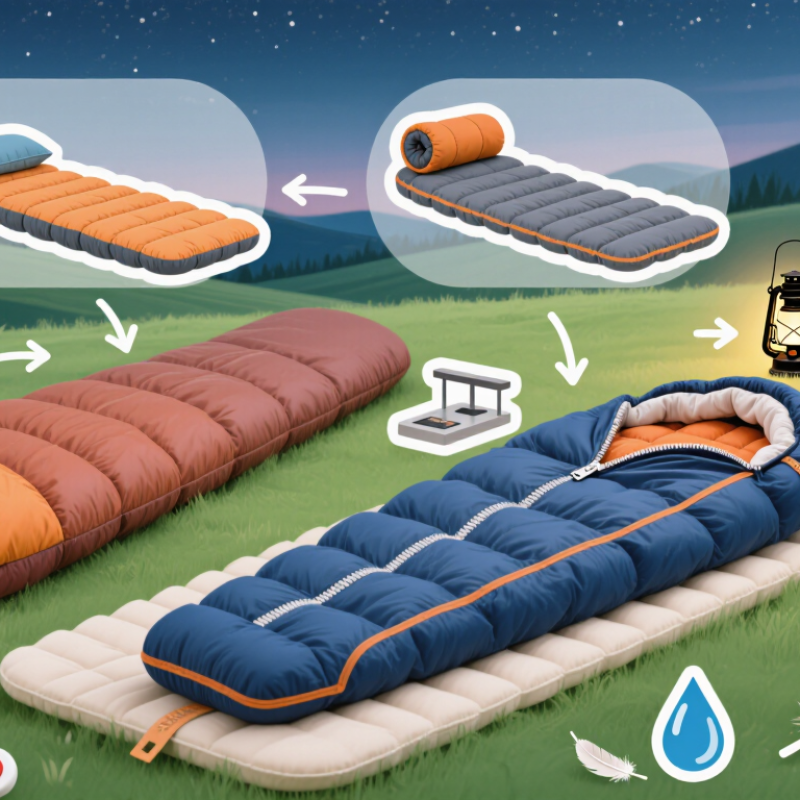
10 Sleeping Bag Buying Tips for Every Camper

Start with ISO 23537 Comfort and Limit Ratings for Your Expected Nighttime Low

A sleeping bag’s temperature label is a test result, not a promise of comfort outdoors. ISO 23537-1:2022 sets requirements for adult sleeping bags and uses controlled thermal-manikin testing. Its comfort rating estimates a temperature at which a standard woman can sleep comfortably; the limit rating estimates the lower boundary for a standard man sleeping curled up. These are different reference points. For a forecast low of 2°C, a bag with a 2°C comfort rating leaves little room for wind, dampness, or a colder-than-expected hollow.

Small details matter. A sleeping pad, dry base layers, fatigue, and individual cold sensitivity all affect how warm you feel. ASTM F3340-18 describes a standardized method for measuring sleeping-pad thermal resistance, or R-value, which helps compare insulation beneath you. The bag rating alone cannot account for that. I still find it tempting to trust a weather app too much; a campsite can be colder than the nearest forecast station.

Tips: Match the comfort rating to your expected low when warmth matters most; consider the limit rating only if you know you sleep warm. Check the label’s test standard, pack a dry layer, and pair the bag with an adequately insulated pad. A small safety margin helps. Not a guarantee.

Compare 600–900 Fill-Power Down with Synthetic Insulation for Your Climate

Fill power measures how much loft one ounce of down can provide; it does not measure a sleeping bag’s total warmth. Higher numbers, from 600 to 900, can mean more warmth for less weight, but fill amount, baffle design, fit, and temperature rating matter too. A 900-fill bag may still feel cold if it is underfilled or too roomy. Check the comfort rating, not just the number.

On humid trips or rainy shoulder seasons, synthetic insulation is often more forgiving. It usually retains more insulating ability when damp and dries faster than down. Expect extra bulk in your pack. Down excels in cold, dry conditions, where 600–900 fill power can provide strong warmth without much weight. Keep it away from tent condensation, and store it uncompressed at home.

Match insulation to the nights you expect, not only the lowest forecast. Compare the comfort rating with likely temperatures, and leave room for a warm base layer. Moisture control still matters. Use a dry sleep layer and keep the bag clear of wet tent walls. It is easy to mistake a higher fill number for a safer choice; check the fit and temperature rating twice.

Choose a Mummy, Rectangular, or Semi-Rectangular Shape for Your Sleep Style

A sleeping bag’s shape changes how freely you move and how much empty space your body must warm. Mummy bags taper toward the feet, limiting drafts and often suiting cold-weather trips. Their narrow cut can feel restrictive, especially if you sleep on your side. Rectangular bags offer more room for bent knees and restless turns. They work well in mild conditions, but the extra space may feel chilly when temperatures drop. Semi-rectangular designs split the difference. Check the shoulder and hip measurements, not just the label.

The Outdoor Industry Association’s 2024 Outdoor Participation Trends Report counted 175.8 million U.S. outdoor recreation participants in 2023. That broad figure does not tell us which bag shape people prefer, so fit still comes down to your sleep habits and trip conditions. For a quick reality check, lie in your usual position and mimic pulling the hood snug. Small test. If the fabric pulls across your shoulders, the cut may be too tight.

Temperature ratings need context, too. ISO 23537-1:2022 sets standardized requirements for testing adult sleeping bags, helping shoppers compare thermal performance. A rating cannot account for every person’s metabolism, clothing, or sleeping pad. I would not choose a tight mummy bag just for its warmth if I know I toss and turn; that trade-off can make a cold night feel longer.

Match Your Bag to an ASTM F3340-Tested Sleeping Pad’s R-Value

A sleeping bag cannot compensate for a cold surface beneath you. Your sleeping pad’s R-value estimates how well it resists heat loss to the ground. ASTM F3340 testing gives a consistent way to compare that insulation across tested pads. It does not predict exactly how warm you will feel. Wind, moisture, fatigue, and individual comfort still matter.

Start with the coldest conditions you expect, then check your bag’s temperature guidance and your pad’s R-value. For mild summer nights, a lower-R pad may be enough; colder ground calls for more insulation. A three-season trip can bring sharp temperature swings, so consider the forecast and campsite, not just the season name. Small details matter. A thin pad on frozen soil can make a warm-rated bag feel disappointing.

It is tempting to treat a higher R-value as a complete solution. It is not. Fit also matters: compressed insulation beneath your body provides less warmth, and drafts can chill you even with a well-matched pad. If you sleep cold, choose more insulation or test your setup close to home. That test may reveal an uncomfortable truth: your favorite bag and pad do not work well together.

10 Sleeping Bag Buying Tips for Every Camper — Match Your Bag to an ASTM F3340-Tested Sleeping Pad’s R-Value

# Buying tip What to check Practical match or example Why it matters
1 Start with the coldest expected night Estimate the lowest overnight temperature for your route and season, not the daytime high. For a trip forecast near 0°C (32°F), compare bags whose stated comfort rating is around that temperature or lower. A sleeping bag’s temperature rating is a guide to its tested thermal performance; weather, campsite exposure, and individual comfort can change what feels warm enough.
2 Read the temperature-rating type Look for an ISO 23537 rating where available, and distinguish the comfort rating from the lower-limit rating. Use the comfort rating as the more cautious reference for a typical cold sleeper; the lower-limit figure is not the same as a comfort promise. Standardized ratings make comparisons more meaningful, but they do not guarantee the same experience for every sleeper or sleep system.
3 Match insulation to your pad’s R-value Check that the sleeping pad’s thermal resistance was measured using ASTM F3340, and note its stated R-value. As a general planning guide, R-values around 2–3 suit many mild conditions; around 3–5 offers more insulation for cool conditions; above 5 is often considered for colder conditions. Adjust for the actual forecast and site. ASTM F3340 is a test method for sleeping-pad thermal resistance, not a sleeping-bag test. A warmer bag cannot fully compensate for a pad that allows substantial heat loss to the ground.
4 Consider adding a second pad for very cold ground Check each pad’s R-value and how the manufacturer recommends using it. When pads are stacked, their R-values are commonly treated as approximately additive for planning—for example, R 2 plus R 3 is about R 5. Actual performance can vary. Extra insulation beneath you can help address conductive heat loss. It does not replace choosing a bag suitable for the air temperature.
5 Choose insulation for the trip conditions Compare down and synthetic fill, including expected moisture, packed size, weight, and drying opportunities. Down is generally valued for warmth at low weight and compressibility; synthetic fill is often chosen for better performance when damp and easier care in wet-use scenarios. Neither fill type is best for every camper. A wet trip, limited drying time, or preference for easy maintenance may affect the choice.
6 Get the length and shape right Use the maker’s height range and check shoulder and hip dimensions, zipper access, and foot-box space. A close-fitting mummy shape generally reduces unused air space; a roomier rectangular shape can offer more movement but may take more energy to warm. A bag that is too short can compress insulation at the feet. Excess space may feel less efficient to warm, while an overly tight fit can also compress insulation.
7 Check the hood, draft collar, and zipper Look for an adjustable hood, a draft collar where appropriate, and a zipper that is easy to operate from inside. For colder trips, prioritize features that help limit warm-air escape around the head, neck, and zipper. Fit and closure details can affect comfort, especially when temperatures approach the bag’s stated rating.
8 Make sure the bag fits your pad Compare bag width and shape with pad width, and check whether the bag has attachment points or a pad sleeve. For a wide pad, verify that the bag will not slide off or leave large exposed areas beside your body. Keeping the sleeper centered on the insulated surface helps maintain a more consistent sleep setup through the night.
9 Balance packed size and weight with your travel style Compare packed dimensions and total weight, including any stuff sack, and consider available pack space. Backpackers often prioritize lower weight and compact packing; car campers can usually choose a bulkier bag for added room or comfort. The most suitable bag is one that meets your warmth needs and is practical to carry, store, and use on your specific trip.
10 Plan for clothing, moisture, and care Check care instructions and consider dry sleep layers, ventilation, and a storage sack that avoids long-term compression. Wear dry base layers and use the bag’s ventilation options to manage comfort; store the bag loosely when not in use if its care instructions recommend it. Damp clothing and trapped moisture can reduce comfort. Proper drying and storage help protect insulation over time.

Note: R-value ranges above are general planning guidance, not a universal temperature guarantee. ASTM F3340 measures sleeping-pad thermal resistance; sleeping-bag temperature ratings are a separate measure. Choose a complete sleep system for the expected conditions and your personal comfort needs.

Check Packed Weight, Shell Durability, and Care Needs Before Buying

A sleeping bag’s packed weight matters most when you carry it for hours. Check the weight of the complete bag, not just its filling. A stuff sack can add a little, and a bulky sack may crowd out food or rain gear. For car camping, a heavier bag may be a fair trade for extra room. On a long hike, every few hundred grams can feel noticeable by late afternoon. Small difference. Still, it adds up.

Look closely at the shell and its stitching. A smooth, thin fabric may save weight, but it can snag on rough tent floors or sharp branches. Check the zipper track, seam finish, and fabric specifications; a higher denier number alone does not guarantee a tougher bag. I once focused too much on a bag’s listed temperature rating and barely checked its shell. That was poor judgment. Consider where you sleep and how carefully you handle gear.

Care needs can shape a bag’s useful life. Down and synthetic insulation may have different washing instructions, so read the care label before buying. Some bags need a large front-loading washer and plenty of drying time. Store the bag loose and dry at home, rather than compressed in its stuff sack. After a damp trip, air it out fully before packing it away. Forgetting that step is easy, especially after a late drive home.

10 Sleeping Bag Buying Tips for Every Camper

Compare packed weight as well as warmth: these approximate ranges show how weight can vary by bag type. Actual packed weight depends on temperature rating, size, materials, and construction.

Before buying, check temperature rating, packed weight, packed size, insulation type, shell durability, fit, zipper design, hood and draft collar, water resistance, and care instructions. Follow the product label for washing and storage.