

WAREHOUSE & SHOWROOM

15700 Middlebelt Rd
(Between 5 & 6 Mile)
Livonia, MI 48154

(734) 751-4413

HOURS

Now open earlier!
Sunday: 11:00 am – 5:00 pm
Monday: 11:00 am – 6:00 pm
Tuesday: CLOSED
Wednesday: CLOSED
Thursday: 11:00 am – 6:00 pm
Friday: 11:00 am – 6:00 pm
Saturday: 10:00 am – 6:00 pm

China Top Ceramic Home Decor Suppliers Worldwide?

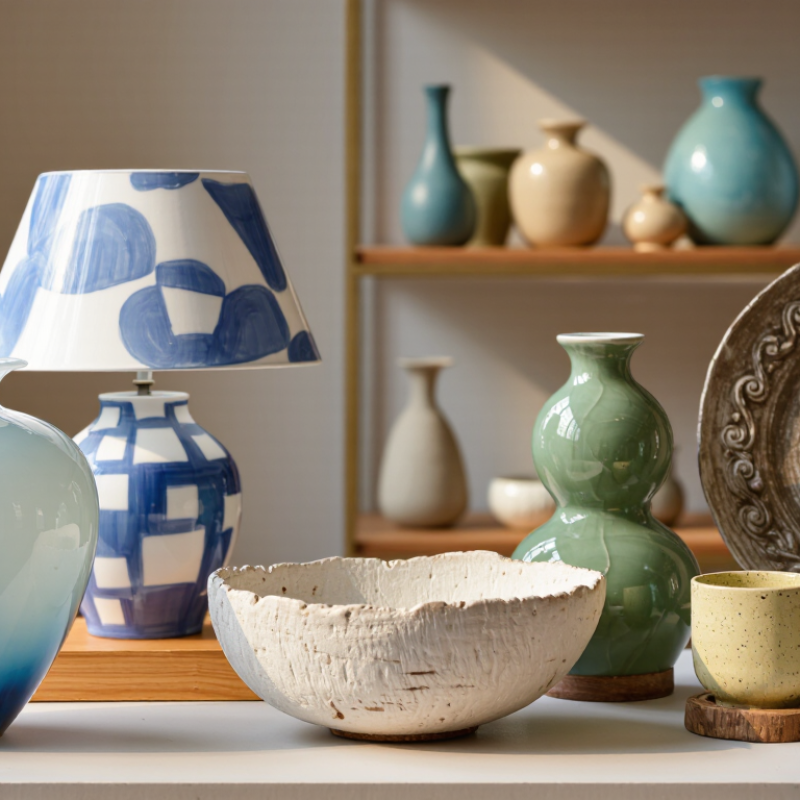
Finding China’s top Ceramic Home Decor suppliers worldwide requires more than comparing product photos and export claims. Reliable sourcing depends on factory experience, material control, design capability, and consistent communication. A supplier may offer elegant vases, textured bowls, ceramic lamps, or hand-painted ornaments. Yet small details often decide commercial success.

Samples reveal reality. Examine the glaze under natural light. Look for pinholes, uneven color, rough bases, and unstable finishes. Ask whether the factory controls firing temperature and tests materials for lead and cadmium. Strong suppliers should explain their production process clearly. They should also provide practical information about packaging, breakage rates, minimum order quantities, and customization timelines. These points matter when products travel thousands of kilometers.

Bernard Leach, a major authority in modern studio pottery, wrote, “The potter’s art is the most ancient of the arts.” His observation still feels relevant today. Ceramic Home Decor combines ancient craft with contemporary manufacturing, retail trends, and global logistics. China remains a significant sourcing market because many producers offer broad collections and flexible production services. However, “top” is never a permanent label. Rankings change, factories evolve, and attractive catalogs can hide inconsistent quality. Buyers should compare samples, audit evidence, communication speed, and after-sales support before committing. No supplier list is perfect. A careful evaluation creates a more trustworthy starting point for retailers, designers, and hospitality buyers seeking durable, distinctive ceramic products.
China Top Ceramic Home Decor Suppliers Worldwide?

What Defines a Top Chinese Ceramic Home Decor Supplier?

A top Chinese ceramic home decor supplier is defined by control, not attractive samples alone. UN Comtrade data shows China remains one of the world’s leading exporters under HS 6913, covering ceramic ornamental articles. Scale matters, but traceability matters more. A reliable supplier should identify clay sources, glaze batches, kiln temperatures, and packing records for each order.

Look for documented quality systems, such as ISO 9001 procedures, plus independent lead and cadmium testing. A serious factory can provide recent laboratory reports, production photos, and corrective-action records. Ask for a golden sample. Then compare it with mass-produced pieces. Small differences in glaze tone can reveal weak process control. They happen.

Experience is visible in practical details. Inspect the kiln curve, wall thickness, foot-ring finishing, and carton drop-test results. Export data from ITC Trade Map can help verify a supplier’s trade history, but shipment volume alone proves little. A large exporter may still overlook fragile handles or uneven bases. That is an uncomfortable possibility.

The strongest suppliers communicate early about shrinkage, mold limits, and seasonal capacity. They explain what cannot be changed. They also accept third-party inspections without resistance. Perfect production is unrealistic. Honest reporting is more valuable.

Major Ceramic Home Decor Manufacturing Regions in China

China’s ceramic home-decor supply chain is regional, not concentrated in one city. According to 2023 UN Comtrade data, China exported more than US$2 billion in ornamental ceramic articles under HS 6913. Foshan, Guangdong, combines large kilns, glaze suppliers, mold workshops, and export logistics. Chaozhou specializes in sanitary ceramics and practical household pieces. Dehua, Fujian, remains important for white porcelain, figurines, and small decorative vessels. Jingdezhen, Jiangxi, supports artistic porcelain and detailed hand-finishing. Liling, Hunan, is known for daily-use porcelain and high-temperature firing. Each cluster has a different production rhythm.

The China Customs Statistics Yearbook shows strong ceramic export activity, but trade figures do not reveal quality consistency. That matters. A supplier may offer excellent samples yet struggle with repeat firing, color matching, or protective packaging. Foshan often suits larger collections and faster replenishment. Dehua is better for lighter porcelain forms and refined surface work. Jingdezhen may fit smaller, design-led orders requiring skilled decoration. Buyers should inspect kiln records, glaze safety documentation, moisture resistance, and carton testing. Factory visits remain valuable. Photos can hide uneven bases, pinholes, and hairline cracks. China’s regional advantage is real, but selecting only by price can create expensive surprises.

Key Product Categories and Customization Services

China Top Ceramic Home Decor Suppliers Worldwide?

Ceramic suppliers in China commonly produce vases, planters, candle holders, figurines, tableware, and decorative wall pieces. Each category needs different testing and finishing controls. For example, a tall vase requires stable firing and careful weight distribution. A planter needs drainage options, smooth edges, and moisture-resistant glazing. Candle holders must sit firmly on flat surfaces. Small details matter.

Reliable suppliers usually provide clay-body information, glaze samples, size drawings, and production photos. Ask for a physical sample before approving bulk production. Customization may include new molds, embossed patterns, logo placement, color matching, matte or glossy finishes, and printed packaging. Some factories also support gift boxes, barcode labels, and protective inserts. Confirm minimum order quantities early. Tooling charges can change the budget.

Color matching is not always exact. Firing temperature, glaze thickness, and kiln position can create visible differences between batches. This is where many buyers underestimate risk. A digital image cannot fully show texture or color depth. Request an approved reference sample and define acceptable variation in writing. Packaging should be tested with drop checks, especially for thin-neck vases or protruding handles. Suppliers with clear inspection records, realistic lead times, and responsive technical communication are generally easier to manage. Still, no production plan is perfect. Allow extra time for sample revisions and unexpected defects.

China Ceramic Home Decor Suppliers Worldwide: Key Product Categories and Customization Services

The chart presents common wholesale minimum order quantities for major ceramic home decor categories. These are indicative industry benchmarks used in international sourcing; actual requirements vary according to product size, glaze, packaging, mold development, and customization complexity.

How to Evaluate Quality, Compliance, and Production Capacity

China Top Ceramic Home Decor Suppliers Worldwide?

How to Evaluate Quality, Compliance, and Production Capacity

A reliable ceramic supplier should provide more than attractive product photos. Request physical samples and inspect glaze coverage, rim smoothness, weight, and base stability. Tiny pinholes may appear under bright light. That detail matters. Ask how defects are recorded and corrected during production. Clear inspection records show practical quality control, not just polished sales language.

Compliance depends on the product’s intended use and destination market. Decorative items may require different testing from products touching food or skin. Request current test reports for heavy metals, coatings, and material safety. Verify that the report matches the exact clay body, glaze, and factory address. Certificates can be outdated or incomplete. Independent laboratory verification is safer when the order is large.

Production capacity should be measured, not guessed. Review kiln size, firing schedules, molding equipment, worker coverage, and recent monthly output. Ask for a realistic capacity plan during peak seasons. Compare sample quality with mass-production controls, including color tolerance and packaging tests. A supplier may promise 50,000 pieces, yet lack enough kiln space for consistent firing. I would also confirm backup plans for damaged molds or delayed raw materials. My own evaluation can still miss hidden constraints, so staged orders and pre-shipment inspections remain sensible.

China Top Ceramic Home Decor Suppliers Worldwide? - How to Evaluate Quality, Compliance, and Production Capacity

Evaluation Dimension Measurable Indicator Recommended Benchmark Evidence to Request Suggested Weight
Product Classification Product category, intended use, and firing type Clearly classified as decorative ceramic, stoneware, porcelain, terracotta, or earthenware; food-contact claims should be separated from decorative-use claims. Technical data sheet, product drawings, intended-use statement, and material declaration 5%
Dimensional Accuracy Length, width, height, diameter, wall thickness, and weight tolerance Use approved drawings with defined tolerances; commonly specified limits for mass-produced decor are approximately ±1–3% for dimensions, depending on shape and process. Signed specification sheet, pre-production sample, calibrated measuring records, and inspection report 8%
Surface and Glaze Quality Pinholes, blisters, crawling, cracks, glaze coverage, color consistency, and sharp edges No structural cracks, exposed sharp edges, unstable glaze, or visible contamination; cosmetic limits must be defined by approved golden samples. Golden sample, defect catalogue, visual inspection standard, and high-resolution production photos 10%
Mechanical Strength Resistance to breakage, impact, stacking, and handling Testing method and acceptance value should match the product type and destination-market standard; fragile decorative shapes require product-specific drop and packing tests. Third-party test report, internal strength test, drop-test video, and packaging validation record 8%
Water Absorption Percentage of water absorbed by the ceramic body Porcelain is generally classified at ≤0.5% water absorption under ISO 13006 tile classifications; decorative earthenware and terracotta can be substantially higher and should be specified by use case. Laboratory test report, body composition, firing temperature, and product classification 7%
Glaze Durability Resistance to crazing, staining, abrasion, thermal shock, and household chemicals No visible crazing or glaze failure after the agreed test cycle; test severity should reflect whether the item is decorative, washable, outdoor, or food-contact. Crazing test, stain-resistance test, thermal-shock results, and chemical-resistance report where applicable 7%
Chemical Compliance Lead, cadmium, restricted substances, and material safety For food-contact products, meet the legal limits of the destination market, such as applicable FDA requirements, EU food-contact rules, and national ceramic regulations. Decorative items must be clearly labelled when not intended for food use. Independent laboratory report, glaze and pigment declarations, bill of materials, and compliance statement 15%
Factory Quality System Incoming inspection, process control, final inspection, traceability, and corrective action Documented quality procedures aligned with ISO 9001 principles; batch traceability should extend from raw materials to finished cartons. Quality manual, inspection plans, calibration records, nonconformance logs, and corrective-action reports 10%
Inspection Acceptance Defect classification and sampling plan Use a written AQL sampling plan based on ISO 2859-1 or an equivalent standard; define critical, major, and minor defects before production. Purchase specification, AQL table, inspection checklist, and independent pre-shipment inspection report 8%
Production Capacity Monthly output for the specific product, available kilns, working shifts, and utilization Capacity should be demonstrated for the same ceramic body, glaze, decoration, and product size; available capacity should exceed forecast demand by at least 20% to absorb rework and seasonal peaks. Capacity statement, kiln schedule, production plan, historical shipment records, and line-loading analysis 10%
Lead Time and Delivery Reliability Sample lead time, production lead time, on-time shipment rate, and replenishment speed Require a written schedule covering sampling, tooling, production, inspection, and export preparation; target an on-time shipment rate of at least 95% based on documented history. Recent delivery-performance records, production calendar, order milestones, and contingency plan 7%
Packaging and Export Protection Individual protection, carton strength, palletization, moisture control, and drop resistance Packaging should pass agreed handling and drop tests with no unacceptable breakage; carton dimensions and stacking limits must support the selected transport method. Packaging specification, carton test report, loading photos, drop-test record, and damage-rate history 8%
Customization Capability Mold development, color matching, logo application, surface decoration, and sample approval Supplier should provide a controlled approval process for artwork, color chips, prototypes, tooling changes, and mass-production samples. Tooling quotation, color-control procedure, approval samples, artwork files, and change-control records 5%
Environmental and Social Controls Wastewater, dust, kiln emissions, energy use, worker safety, and responsible sourcing Factory should comply with applicable Chinese environmental and workplace-safety requirements and maintain documented waste, wastewater, and emissions controls. Environmental permits, wastewater records, safety training logs, audit reports, and corrective-action plans 5%
Overall Evaluation Weighted score based on verified documentation, samples, factory audit, and independent inspection Recommended decision guide: 85–100 = preferred; 70–84 = qualified with corrective actions; below 70 = higher-risk candidate requiring further verification. Completed scorecard, approved samples, compliance documents, audit findings, and pre-shipment inspection results 100%
Assessment note: Benchmarks should be adjusted according to the product category, intended use, destination-market regulations, order volume, and approved quality standard. Supplier claims should be verified through current third-party reports, factory audits, production samples, and pre-shipment inspection.

Sourcing, Pricing, and Export Considerations for Global Buyers

China Top Ceramic Home Decor Suppliers Worldwide?

Global buyers sourcing ceramic home décor should evaluate factories beyond online catalogs. Request recent product photos, production videos, business documents, and export references. A reliable supplier should explain clay composition, glaze types, firing temperature, and quality inspection steps. Ask for a paid sample before discussing large quantities. Small details matter, such as uneven bases, pinholes, color variation, and weak handles.

Pricing depends on material, mold fees, decoration, order volume, packaging, and delivery terms. A simple ceramic vase may cost little at the factory gate, but custom molds and protective cartons can change the final figure sharply. Compare quotations on the same basis, such as EXW or FOB. Include sample charges, inspection fees, inland transport, insurance, duties, and port costs. Cheap is rarely simple. That assumption can fail.

Export planning requires accurate product descriptions, tariff classification, commercial invoices, packing lists, and destination-market compliance checks. Buyers should confirm limits for heavy metals in glazes, packaging requirements, labeling rules, and breakage policies. Use carton drop tests and inner foam or molded pulp supports for fragile pieces. Production often takes longer before major holidays or during peak shipping periods. A written schedule should cover sampling, approval, production, inspection, and dispatch. Even experienced buyers sometimes underestimate damage rates. Keep a realistic replacement allowance and review the first shipment carefully before expanding the order.