

What Are the Top Types of Meat Processing Equipment in 2026?
Meat processing plants rarely depend on one machine. A grinder may prepare trim, while a mixer blends ingredients and a slicer produces even portions. In 2026, the right equipment depends on product type, production volume, labor availability, and cleaning requirements. Small details matter. A worn blade can leave uneven slices; a poorly matched conveyor can slow an otherwise fast line.
Market data points to sustained investment, though forecasts are not guarantees. Grand View Research valued the global Meat Processing Equipment market at approximately USD 11.89 billion in 2023 and projected a 5.6% compound annual growth rate from 2024 to 2030. The OECD-FAO Agricultural Outlook 2024–2033 also anticipates rising global meat consumption, adding pressure on processors to improve capacity and consistency. These figures describe broad trends, not the needs of every facility. A regional butcher and a high-volume plant face different constraints.
This guide examines the main equipment categories used across modern processing lines: grinders, cutters and slicers, mixers, tenderizers, stuffers, forming machines, cooking systems, and packaging equipment. It also considers inspection and sanitation tools, which can be overlooked when buyers focus only on output. That is a real blind spot. Faster machinery may help, but only when workers can operate, maintain, and clean it reliably. Specifications deserve careful review, and no single “top” machine suits every plant.
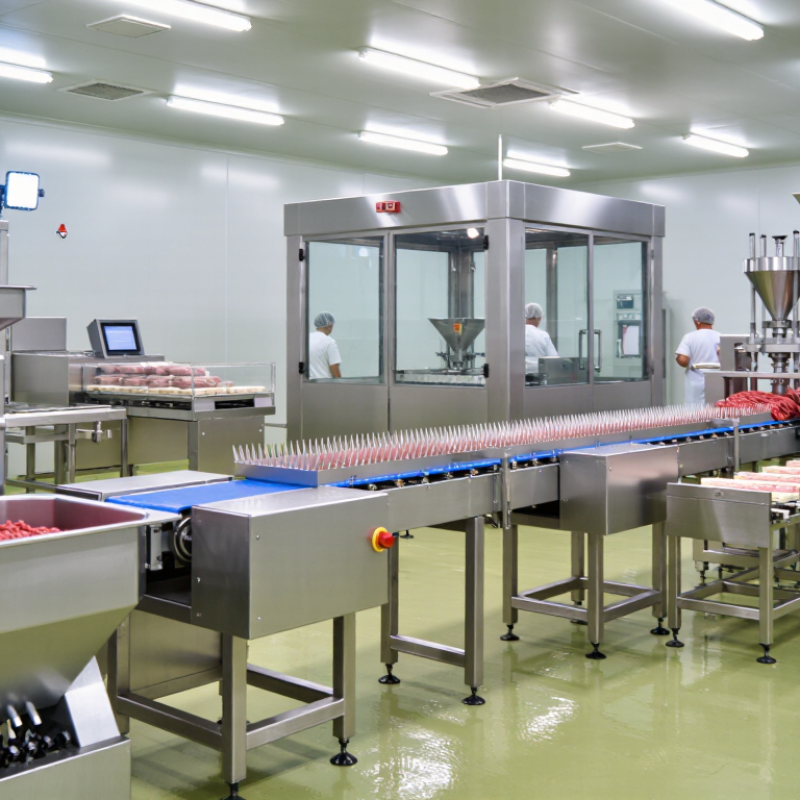
Meat Processing Equipment: Purpose, Scope, and 2026 Industry Context
Meat processing equipment covers machines that move meat from incoming inspection through portioning, packing, and cold storage. Common types include grinders, mixers, slicers, bandsaws, tumblers, stuffing systems, conveyors, and packaging units. Each has a defined job. Together, they support consistent sizing, efficient workflow, and hygiene when properly selected and maintained. A grinder, for example, should match product temperature, batch volume, and particle-size needs—not just its stated capacity. Equipment scope also includes guards, cleanable surfaces, sensors, and controls. These details are easy to overlook.
In 2026, processors are balancing labor constraints with food-safety oversight, energy costs, and reliable output. Many facilities are assessing automation, digital monitoring, and production data capture, but suitable upgrades vary. A small shop may gain more from dependable refrigeration and easier cleaning than from a connected production line. Practical selection starts with product mix, floor space, cleaning routines, and service access. Technology helps, but trained operators still matter. Even good equipment can cause bottlenecks when connected machines run at mismatched speeds. Fit matters.
Tips: Check cleaning access, spare-part availability, and operator training before purchase. Test equipment with your actual product where possible. A polished specification sheet is useful, but it cannot reveal every maintenance challenge.
What Are the Top Types of Meat Processing Equipment in 2026? — Meat Processing Equipment: Purpose, Scope, and 2026 Industry Context
| Equipment type | Primary purpose | Typical products or process stage | Key selection considerations | 2026 industry context |
|---|---|---|---|---|
| Meat grinder | Reduces meat into smaller particles by forcing it through a perforated plate, often after cutting or breaking down larger pieces. | Ground beef, ground pork, sausage mixtures, and raw material preparation. | Capacity, plate-hole size, product temperature, ease of disassembly, and the intended grind consistency. | Remains a core machine for processors making ground products. Hygienic design and reliable temperature control help support food-safety and product-quality programs. |
| Mixer and blender | Combines meat with seasonings, ingredients, or previously ground material to distribute components evenly. | Sausage batter, seasoned ground meat, meatballs, and other formulated products. | Batch size, mixing action, ingredient-handling needs, cleanability, and the degree of mixing required. | Useful across both small-batch and high-volume production. Recipe consistency and clear control of mixing time remain important operational goals. |
| Bowl cutter and emulsifier | Chops meat rapidly and, when the formulation and process allow, produces a fine, uniform meat batter or emulsion. | Fine-textured sausages, frankfurter-style products, pâtés, and other emulsified preparations. | Cutting capacity, speed control, heat generation, batch size, and compatibility with the desired texture. | Processors use these machines where a consistent fine texture is required. Managing product temperature during chopping is essential to quality. |
| Slicer and dicer | Cuts boneless meat into uniform slices, strips, or cubes for further processing or retail-ready products. | Deli meat, stir-fry cuts, diced meat, and portioned ingredients. | Cut dimensions, product presentation, feed method, throughput, blade maintenance, and safe cleaning procedures. | Consistent portions can help reduce variation in downstream cooking and packaging. Changeover and sanitation time matter in facilities producing multiple formats. |
| Forming machine | Shapes ground or comminuted meat into repeatable portions using forming plates, molds, or other forming mechanisms. | Burgers, meat patties, nuggets, and other portion-controlled products. | Portion size and shape, product formulation, line speed, changeover requirements, and integration with coating or packaging lines. | Automation can improve portion consistency in repetitive production. Equipment must be matched to the product recipe and desired shape. |
| Tumbler and meat injector | Introduces and distributes brine or marinade; tumbling helps move liquid and seasoning through suitable cuts. | Cured or marinated whole-muscle products, poultry, and prepared meats. | Product type, brine distribution, batch capacity, process settings, and controls that help maintain cold-chain conditions. | Used when processors need repeatable marination or curing steps. Process validation and careful ingredient control remain important for safety and consistency. |
| Cooking, smoking, and thermal-processing equipment | Applies controlled heat, and where applicable smoke, to cook, smoke, or otherwise process meat products. | Cooked ham, smoked sausages, bacon, and other cooked or smoked products. | Product and load capacity, temperature and humidity control, airflow, monitoring, and validated time-temperature procedures. | Accurate process control and documented monitoring support product consistency and food-safety programs. Equipment requirements vary with the product and process. |
| Chillers and freezing equipment | Removes heat from meat or finished products to support controlled refrigeration or freezing. | Carcasses, cuts, packaged products, and frozen meat. | Cooling or freezing capacity, product load, airflow, temperature monitoring, energy use, and facility layout. | Maintaining the cold chain remains fundamental from processing through storage. Energy efficiency and dependable temperature control are common purchasing considerations. |
| Packaging equipment | Wraps, seals, or packages products to protect them during handling, storage, and distribution. | Fresh cuts, ground meat, cooked sliced products, and frozen items. | Package format, seal integrity, line speed, product presentation, material compatibility, and integration with inspection systems. | Packaging choices are shaped by product shelf-life needs, distribution requirements, and material-use goals. The right format depends on the product and validated storage conditions. |
| Cleaning and sanitation systems | Clean and sanitize equipment and food-contact areas according to the facility’s documented procedures. | Processing lines, conveyors, cutting equipment, and other food-contact surfaces. | Cleanability, access to surfaces, drainage, chemical compatibility, and alignment with the facility’s sanitation program. | Hygienic equipment design and effective sanitation are essential throughout meat processing. Cleaning methods must follow equipment guidance and applicable food-safety requirements. |
Scope note: Equipment selection depends on the species processed, product range, plant capacity, layout, food-safety controls, and applicable regulations. The 2026 context above describes general operational considerations, not a market-size ranking or sales forecast.