What Is the Best Type of Leather Sofa?
Choosing the best leather sofa is not as simple as picking the softest seat or the darkest color. The right choice depends on how the sofa will be used, how much care you can give it, and what kind of wear you find appealing. A busy family room has different needs from a quiet reading corner. Sunlight near a window, a dog’s claws, and the occasional coffee spill all matter. Small details count.
Leather analyst Tanner Leatherstein is known for examining leather quality and construction. A practical rule for this guide is: “Look beyond the label; judge the hide, finish, and build together.” That distinction helps explain why two sofas described as leather can feel and age very differently. Full-grain leather often keeps more of the hide’s natural markings and may develop a rich patina. Corrected-grain and protected finishes can offer a more uniform look and simpler day-to-day care, though they may feel less natural. No option is perfect. A soft, supple surface may show scratches sooner; a tougher finish may feel cooler or more rigid.
This guide compares leather types, explains their trade-offs, and shows what to inspect before buying. You’ll learn how grain, finish, cushion support, and frame construction affect comfort and longevity. We’ll also consider budget and maintenance, with practical examples rather than sweeping promises. The goal is not to crown one leather as best for everyone. It is to help you choose a leather sofa that suits your room, routines, and tolerance for signs of use. A little honest wear can be beautiful. Or simply annoying.
How Sofa Leather Types Are Classified
How Sofa Leather Types Are Classified
Leather sofa labels can be confusing because they describe different things. Some refer to the part of the hide used; others describe its surface finish. Knowing the difference makes comparisons more useful.
Full-grain leather keeps the hide’s natural outer surface, including small marks and variations. It often develops a deeper patina with use. Top-grain leather is also made from the upper hide layer, but its surface may be sanded or treated for a more even appearance. Split leather comes from lower hide layers and is commonly coated or embossed to resemble a smoother grain. Bonded leather contains leather fibers combined with other materials; its composition and durability can vary.
Finish is a separate category. Aniline leather has little surface pigment, so natural markings remain visible and stains may show more readily. Semi-aniline leather has a light protective finish. Pigmented leather uses a more opaque coating, which can make color and appearance more consistent.
Look closely. A repeated grain pattern may be embossed, while natural pores and marks tend to vary. Still, appearance alone cannot confirm construction. Ask what part of the hide is used and how the surface is finished. These labels are not always applied consistently, and a polished sample may feel different from a large sofa after years of use.
Which Leather Properties Affect Comfort and Durability
Comfort and durability depend on more than whether a sofa is called “genuine leather.” Leather thickness, surface finish, tanning, and hide selection all matter. Aniline leather often feels soft and shows natural grain, but its lightly protected surface can absorb spills and develop marks. Pigmented leather has a more protective coating; it may resist everyday stains better, though it can feel less supple. There is a trade-off. In a warm room, breathable leather can feel less sticky against bare arms, while a tightly coated surface may feel cooler at first. Cushion foam and seam construction also affect how the sofa feels after years of sitting.
Ask for test results, not just claims such as “premium” or “high durability.” ISO 14268 measures water-vapour permeability, a useful indicator of how readily leather passes moisture. ISO 12947-2 provides a Martindale abrasion method, reporting cycles until fabric breakdown; it is not a complete prediction of sofa lifespan. For colour transfer, ISO 11640 measures rubbing fastness. These professional test standards make supplier data more comparable, but results still depend on the tested leather and finish. Check that the report names both. A high abrasion result cannot tell you whether a seat will feel stiff, and comfort cannot be captured by one number. I would also inspect a sample in daylight and press its edge gently. Small differences in coating and grain can change the feel more than a showroom label suggests.
How Full-Grain, Top-Grain, Split, and Bonded Leather Compare
Full-grain leather keeps the hide’s natural surface, including small scars and wrinkles. It usually develops a deeper patina with use. Top-grain leather is lightly sanded or corrected, so its surface looks more even and cleans more easily. The trade-off is less visible natural character. Neither label guarantees a better sofa; hide thickness, finish, stitching, and frame construction matter too.
Split leather comes from the lower hide layer. It often has a coating or embossed surface, which can look uniform but may feel less supple. Bonded leather is made from leather fibers and binders attached to a backing. It can suit a tighter budget, but the surface may peel as the sofa ages. No grade is magic. The Leather Working Group’s 2023 Impact Report documents more than 1,000 audited sites, but auditing a tannery does not certify a sofa’s comfort or lifespan.
For a busy living room, inspect a sample in daylight and bend it gently. Does the finish crease sharply? Does the back feel fabric-like? Ask whether the seating panels use the same material as the sides. ISO 11640 provides a standardized method for testing leather’s resistance to rubbing, yet product labels rarely show the result. That missing detail matters. A well-finished top-grain sofa may serve a household better than thin, poorly assembled full-grain leather.
How to Match Leather Type to Lifestyle, Climate, and Budget
What Is the Best Type of Leather Sofa?
How to Match Leather Type to Lifestyle, Climate, and Budget
The best leather depends on how your home is used. Full-grain leather develops a visible patina and can last for years with regular care, but it usually costs more. Top-grain leather has a smoother, more uniform surface and may suit busy living rooms. Corrected-grain leather often costs less and resists everyday marks, though it can feel less natural. Touch samples in person. Feel it first.
Climate matters, too. In hot, humid rooms, leather may feel warm or slightly tacky against bare skin. A lighter finish and breathable room conditions can help, but no leather stays cool in every season. In dry homes, leather can lose moisture; follow the maker’s care guidance rather than applying oils at random. Sunlight near a large window may also fade or dry the surface over time.
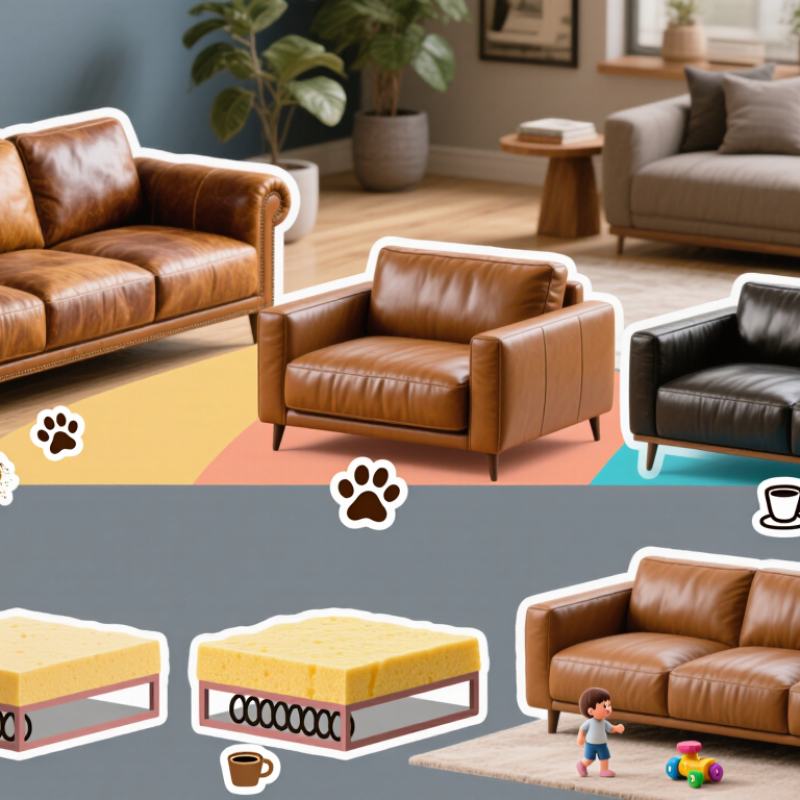
Tips: For pets or young children, look for a finish that is easy to wipe clean, and ask how it handles scratches. Set a realistic budget that includes cleaning products and occasional professional care. Check seams, cushions, and sample colors in your own lighting. Small details count. I’d still expect some scuffs; “low maintenance” does not mean maintenance-free.
What Is the Best Type of Leather Sofa?
Compare common leather types by typical wear resistance, warm-climate breathability, and affordability. Ratings are an indicative 1–5 guide, not standardized test results; actual performance varies with the hide, finish, and care.
For long-term durability, full-grain or top-grain leather is often a strong choice. In warmer rooms, look for a less heavily coated finish and good ventilation. Bonded leather usually costs less upfront, but its surface is more prone to wear over time.
How to Assess Leather Quality Before Buying a Sofa
A leather label tells you little by itself. Check the surface in daylight: full-grain leather usually shows natural marks, while corrected grain has a more uniform finish. Neither detail alone proves durability. Press a thumb gently into the seat; a slight crease should relax, though soft feel is not a quality test. Inspect seams and edges, too. Peeling layers or a plasticky coating deserve questions.
Ask for the hide type, finish, and test results in writing. ISO 11640:2018 sets out a controlled rubbing test for leather color fastness, so ask whether the upholstery was tested and request its result. The European standard EN 12520:2015 includes a 25,000-cycle seat durability test for domestic seating. That evaluates the sofa’s construction, not the leather hide itself. A strong frame cannot compensate for weak upholstery. Nor can a test score tell you how a finish will age in your home. I would compare samples under a window and ask how they respond to spills and sunlight. Small differences matter.