
WAREHOUSE & SHOWROOM

15700 Middlebelt Rd
(Between 5 & 6 Mile)
Livonia, MI 48154

(734) 751-4413

HOURS

Now open earlier!
Sunday: 11:00 am – 5:00 pm
Monday: 11:00 am – 6:00 pm
Tuesday: CLOSED
Wednesday: CLOSED
Thursday: 11:00 am – 6:00 pm
Friday: 11:00 am – 6:00 pm
Saturday: 10:00 am – 6:00 pm

Why Are End Tables Essential for Every Living Room?

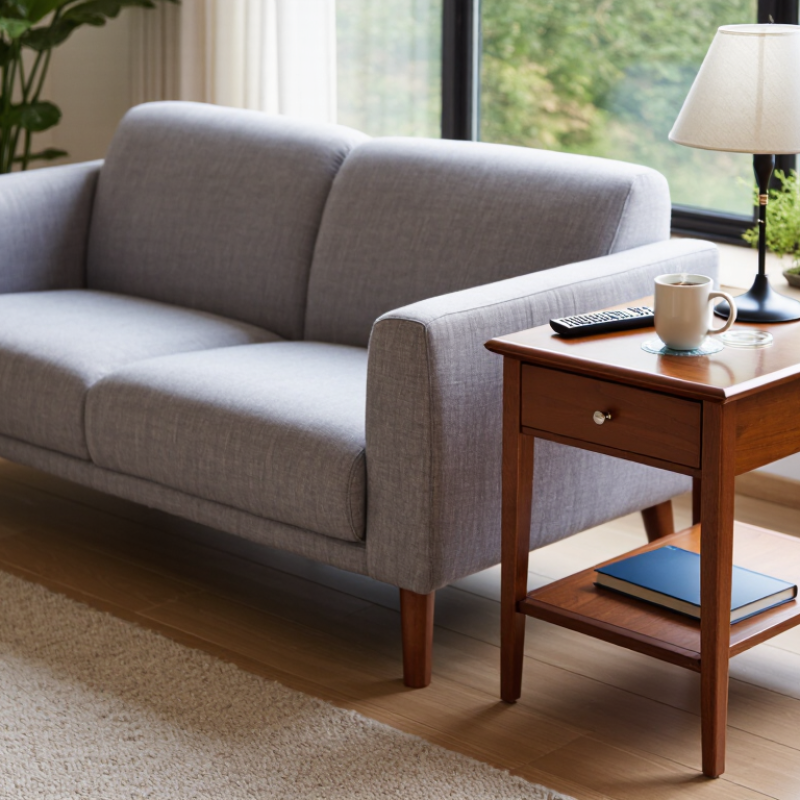
A living room has many small routines: setting down a mug, reaching for a book, or charging a phone before bed. End tables give these everyday objects a nearby, stable place. Set one beside a sofa or reading chair, and a lamp, coaster, or remote stays within easy reach. The benefit is modest but real. Less searching, fewer items balanced on cushions.

Their usefulness also depends on the room. A table that is too tall can feel awkward beside a low sofa; one that is too large may narrow a walkway. Measure the available space, including the path people use to move through the room. Then consider storage, surface area, and material. A drawer can hide small clutter, while an open shelf keeps a favorite book visible. Small, but useful.

End tables can also help a room feel connected. Matching finishes create a quieter look, while different shapes or materials add contrast. Neither choice works everywhere. A glass top may suit a compact room visually, but it needs regular wiping; a sturdy wood surface may better handle daily use. These are practical trade-offs, not strict rules. And sometimes, a table simply becomes a catchall. That is worth noticing. Choosing with real habits in mind can make an end table more than a decorative extra: it can support comfort, organization, and the way a living room is actually used.
Why Are End Tables Essential for Every Living Room?

Defining End Tables Through Furniture Ergonomics and Standard Dimensions

End tables are small, but their placement affects everyday comfort. Furniture ergonomics focuses on reach, posture, and safe movement—not appearance alone. A practical rule is to keep the tabletop close to the sofa arm height, usually within about two inches. This lets a seated person reach a drink without leaning far or lifting the shoulder. Many end tables measure roughly 22 to 30 inches high, though sofa and chair dimensions vary. Measure the actual seat and arm before choosing. Numbers are guides, not laws.

The Business and Institutional Furniture Manufacturers Association’s ANSI/BIFMA X5.5 standard evaluates tables for performance and safety; it does not prescribe one universal end-table size. That distinction matters. A compact table beside a narrow armchair may need a top around 16 inches wide, while a broad sofa can accommodate more surface area. Leave enough room for knees and walking paths, too. A lamp base, book, and glass should fit without crowding the edge. Small details count. In practice, a table that looks balanced in a showroom can feel awkward at home, especially when the sofa sits low or the room’s walkway is tight. Measure twice; living rooms rarely match diagrams.

Applying the 18–24-Inch Reach Rule for Everyday Convenience

Why Are End Tables Essential for Every Living Room?

An end table earns its place by keeping everyday items close without crowding the room. Use the 18–24-inch reach rule as a practical starting point: keep the items you use most within that distance of your usual seated position. A glass of water, reading lamp, or book should be easy to reach without leaning forward. Measure from where your hand naturally rests, not just from the sofa arm. Small detail. It changes the feel of the room.

Check the distance while sitting in your usual spot. A table may look perfectly placed from across the room, yet feel awkward when you reach for a mug. Leave enough space to walk past, and make sure the tabletop does not block a doorway or catch your knee. Its height matters, too: a surface near the sofa arm is often convenient, but seat and arm heights vary. I still misjudge this sometimes. A quick seated test is more useful than guessing from a floor plan.

Tips: Place a phone, book, or coaster on the table, then sit down and reach naturally. If you twist or stretch, move it closer. Keep the top lightly arranged; a lamp and one daily-use item may be enough. That matters.

Using NKBA’s 36-Inch Clearance Guideline to Improve Room Circulation

Why Are End Tables Essential for Every Living Room?

Using NKBA’s 36-Inch Clearance Guideline to Improve Room Circulation

A well-placed end table gives a lamp, book, or glass of water a reliable home. It can also make a living room easier to navigate. NKBA planning guidance uses 36 inches as a useful minimum for clear walking paths. Treat it as a practical benchmark, not a rule that guarantees comfort in every room. Measure the route people actually use, including the space between a sofa, table, and doorway.

Small details matter. A table pushed too close to a sofa can narrow the passage, while one placed too far away becomes awkward to reach. Try leaving about 36 inches along the main route, then walk through with a laundry basket or a child beside you. Does the path still feel easy? Not always. Furniture shape, rug edges, and daily habits can change how a room flows.

The AARP 2024 Home and Community Preferences Survey found that 75% of adults aged 50 and older want to remain in their current homes as long as possible. That finding is a reminder that comfortable movement matters across life stages. End tables can support that goal when they provide useful surfaces without blocking circulation. Even so, a tape measure cannot judge every room. Sit down, stand up, and test the path before settling on a layout.

Comparing Storage, Surface Area, and Lighting Functions in Living Rooms

Why Are End Tables Essential for Every Living Room?

Comparing Storage, Surface Area, and Lighting Functions in Living Rooms

An end table makes the space beside a sofa useful, not merely filled. A drawer can hide remotes, coasters, and charging cables; an open shelf keeps a book within reach. Choose storage based on what actually collects in your room. Too many compartments can become clutter magnets. I have seen a neat tabletop turn into a daily drop zone.

Surface area matters just as much. A mug, reading glasses, and a small lamp need room without crowding one another. Measure the sofa arm and walking path before buying. A table that projects too far can interrupt movement, even if it looks perfect in a showroom. Houzz’s 2024 U.S. Houzz & Home Study reported median renovation spending of $24,000 in 2023. That figure covers broad home projects, not end tables, but it underlines why small furnishings deserve careful planning.

Lighting is the third job. A table can place a lamp close to a seated reader, while its shade softens a dark corner. Check outlet access and keep the lamp base stable. Tips: Tape the tabletop’s dimensions onto the floor. Test the walking route, then check whether a seated person can reach the surface comfortably.

Why End Tables Matter in the Living Room

An end table keeps everyday items within reach, adds a convenient surface, and provides a place for a table lamp. The ratings below are illustrative functional comparisons, not survey results.

Relative convenience score: 1 = low, 5 = high. Scores describe typical use: an end table supports a nearby lamp, but does not produce light itself.

Selecting Materials by Durability Ratings and Interior Design Standards

An end table takes daily wear in small, visible ways: mug rings, bumped corners, and keys dragged across its surface. Durability ratings help, but only when you know what was tested. For wood, a Janka hardness figure indicates resistance to denting, not resistance to scratches or moisture. Check the finish separately. For stone, ask about porosity and sealing; for metal, look for information on coating wear and corrosion. Glass should have clearly stated safety specifications. Test methods differ. A rating without its testing conditions can be hard to compare.

Interior design standards are practical, too. A table near a sofa usually works best when its top sits close to the seat cushion height, so a drink is easy to reach without leaning. Leave enough clearance for feet and walking paths. In a compact room, a rounded edge may feel less awkward than a sharp corner. Match the material to the room’s use, not just its color: a pale, porous surface can show spills quickly in a busy home. Still, a room need not look perfectly coordinated. A slightly different wood tone can add warmth, though I have seen it look accidental when the undertones clash. Ask for care instructions and test details before choosing.

Why Are End Tables Essential for Every Living Room? – Selecting Materials by Durability Ratings and Interior Design Standards

Material Typical Durability Rating Moisture and Heat Resistance Scratch and Impact Performance Recommended Interior Applications Key Care Requirements Recommended End-Table Dimensions Design and Safety Considerations
Solid Hardwood High Good resistance when sealed; prolonged standing water and hot cookware can damage the finish. Good impact strength; surface can show dents or scratches but is usually repairable by refinishing. Traditional, transitional, Scandinavian, rustic, and contemporary living rooms. Use coasters, wipe spills promptly, and clean with a soft, slightly damp cloth. Height: 20–26 in
Top diameter or width: 16–24 in
Choose rounded edges for high-traffic spaces. The table height should generally align with or sit slightly below the sofa arm.
Engineered Wood with Durable Laminate Medium to High Good surface resistance; exposed edges and seams are more vulnerable to moisture. Good resistance to everyday scuffs; deep chips may be difficult to repair invisibly. Modern, minimalist, rental, family, and budget-conscious interiors. Avoid soaking the surface and use non-abrasive cleaners. Height: 20–26 in
Top width: 16–24 in
Look for sealed edges and stable construction. Coordinate the finish with nearby cabinetry or shelving.
Tempered Glass Medium Excellent resistance to moisture and normal household heat; sudden extreme temperature changes should be avoided. Resistant to ordinary surface scratches but vulnerable to hard, concentrated impacts at edges and corners. Contemporary, minimalist, small-space, and visually light interiors. Clean with a soft microfiber cloth; avoid abrasive pads and harsh powders. Height: 20–26 in
Top diameter or width: 16–22 in
Tempered glass is preferred for furniture applications. Use polished or protected edges and maintain stable spacing from seating.
Powder-Coated Metal High Very good resistance to moisture; damaged coating may expose the metal to corrosion. Strong against impact and daily use; the coating can chip if struck by heavy objects. Industrial, modern, loft, commercial-style, and high-use living rooms. Dust regularly and wipe spills promptly; avoid chlorine-based or abrasive cleaners. Height: 20–26 in
Top diameter or width: 16–24 in
Check for level feet and protected contact points. Lightweight frames should have a stable base to reduce tipping risk.
Natural Stone High Good overall resistance, but porous stones may absorb liquids and require periodic sealing. Excellent resistance to everyday wear; some stone surfaces can chip at exposed corners. Classic, luxury, Mediterranean, contemporary, and statement-focused interiors. Use pH-neutral cleaners, wipe acidic spills quickly, and follow the surface-sealing schedule. Height: 20–25 in
Top width: 16–24 in
Stone is heavy and should be supported by a strong frame. Use softened corners where children or pets are present.
Ceramic or Porcelain Tile Top High Very good resistance to moisture, stains, and normal household heat. Good scratch resistance; grout lines and tile edges can chip under concentrated impact. Eclectic, Mediterranean, bohemian, contemporary, and patterned interiors. Clean with a soft cloth; maintain grout according to its condition and finish. Height: 20–26 in
Top diameter or width: 16–24 in
Use a rigid, well-supported base. Select low-maintenance grout colors for frequently used family rooms.
Bamboo Panel Medium to High Good resistance when properly finished; prolonged moisture can cause swelling or surface changes. Good everyday performance with moderate resistance to dents and scratches. Japandi, Scandinavian, natural, modern, and sustainability-oriented interiors. Keep dry, use coasters, and avoid aggressive cleaners or prolonged direct sunlight. Height: 20–26 in
Top width: 16–24 in
Choose a stable, formaldehyde-controlled panel and a finish suitable for furniture use. Natural grain adds visual warmth.

Practical sizing guideline: an end table is usually most comfortable when its top is level with or slightly below the adjacent sofa arm, with approximately 1–3 inches of clearance from the seating. Allow enough circulation space to avoid blocking walkways and door swings.